The Books
The following titles are from Thinking Money for Kids: Cents-ational Reads to Teach Young People About Money, a free resource guide and book list for libraries created by ALA and the FINRA Investor Education Foundation. The guide highlights 40 recommended titles for kids from birth to grade 8, all selected by the Quicklists Consulting Committee of the Association for Library Service to Children. Check out the full guide for more titles and tips!
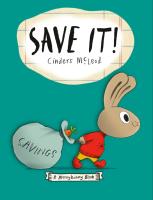
Save IT! (A Moneybunny Book) by Cinders McLeod; published by Nancy Paulsen Books, 2019
Honey earns two carrots a week to take care of her siblings. Her five siblings are so loud and bouncy, she wishes she had a place of her own to escape to for some peace and quiet. So what’s a bunny to do? Get creative and figure out a savings plan—even if it means forgoing a treat or two. This is the third book in the Moneybunnies series, following Spend It! and Earn It!
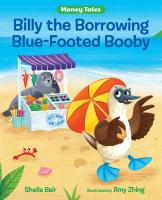
Billy the Borrowing Blue-Footed Booby by Sheila Bair; illustrated by Amy Zhing; published by Albert Whitman & Co., 2021
Billy the Blue-Footed Booby, who lived on the Galapagos, wanted to buy an umbrella, so he went to Selling Seal. But Billy didn’t listen to Seal’s explanation of what that umbrella would end up costing him. And then Billy wanted a fan like Arlene the tortoise’s, a purple-striped wig like Ig the iguana’s, neon-green shoes like Niels the lizard’s, and Seal’s anchovy grill. In this brightly illustrated and approachable story, Billy discovers the concepts of “buy now and pay later” and “needs versus wants.”
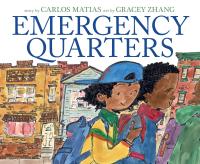
Emergency Quarters by Carlos Matias; illustrated by Gracey Zhang ; published by Katherine Tegen Books, 2024
This book takes us back in time when cell phones were rare, but pay phones were always nearby. Ernesto is just old enough to walk to school without his parents. Every morning, his mother gives him a quarter to be used for an emergency phone call, if needed. As he discovers his new freedom with his friends, Ernesto finds he is tempted to use the shiny quarters for treats instead of saving for emergencies.
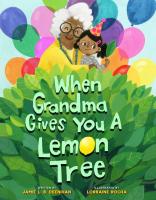
When Grandma Gives You a Lemon Tree by Jamie L.B. Deenihan; illustrated by Lorraine Rocha; published by Sterling Children’s Books, 2019
“When life gives you lemons, make lemonade.” In this imaginative take on that popular saying, a child is surprised (and disappointed) to receive a lemon tree from Grandma for her birthday. After all, she DID ask for a new gadget. But when she follows the narrator’s careful—and funny—instructions, she discovers that the tree might be exactly what she wanted after all. This clever story, complete with a recipe for lemonade, celebrates the pleasures of patience, hard work, nature, community . . . and putting down the electronic devices just for a while.
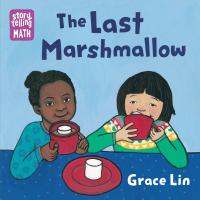
The Last Marshmallow by Grace Lin; published by Charlesbridge, 2020
After playing in the snow, Olivia and Mei are ready for cocoa. There’s one marshmallow for Olivia and one marshmallow for Mei. But what will they do with the third marshmallow? How can two friends share three things fairly?
The Programs
You’ve selected a great picture book for your next storytime that incorporates themes like saving, spending, and earning. How can you make the program even more engaging for kids? Here are a few easy-lift ways to incorporate hands-on activities and drive home money concepts during your storytime.
RAISE A PADDLE
“Earning” and “spending” are key concepts that appear in lots of picture books. Print “earn” and “spend” paddle templates and affix them to paper plates (adding popsicle sticks for handles, if you wish). Pass out the paddles to your audience. Whenever a character earns or spends money, invite the kids to put the appropriate paddle in the air and shout “earn!” or “spend!”
HAVE A COIN “PETTING ZOO”
As credit card and mobile payments become more prevalent, some children may not come into regular contact with cash. Gather various denominations of coins and invite kids to look at them up close, discussing how much each coin is worth. For a fun twist, introduce any foreign coins you have on hand.
If your storytime book mentions coins, such as Emergency Quarters by Carlos Matias, you might invite the kids to hold the coins throughout the reading and shout out the name of their denomination when it appears in the story. If you would prefer to avoid real coins, you may print paper currency (dollars and coins).
FILLING A PIGGY BANK
If the characters in your story save money, you can demonstrate the concept with a piggy bank. Invite kids to drop a coin into the piggy bank each time the character makes a wise money decision. Kids with some money math skills can add up the total as you go.