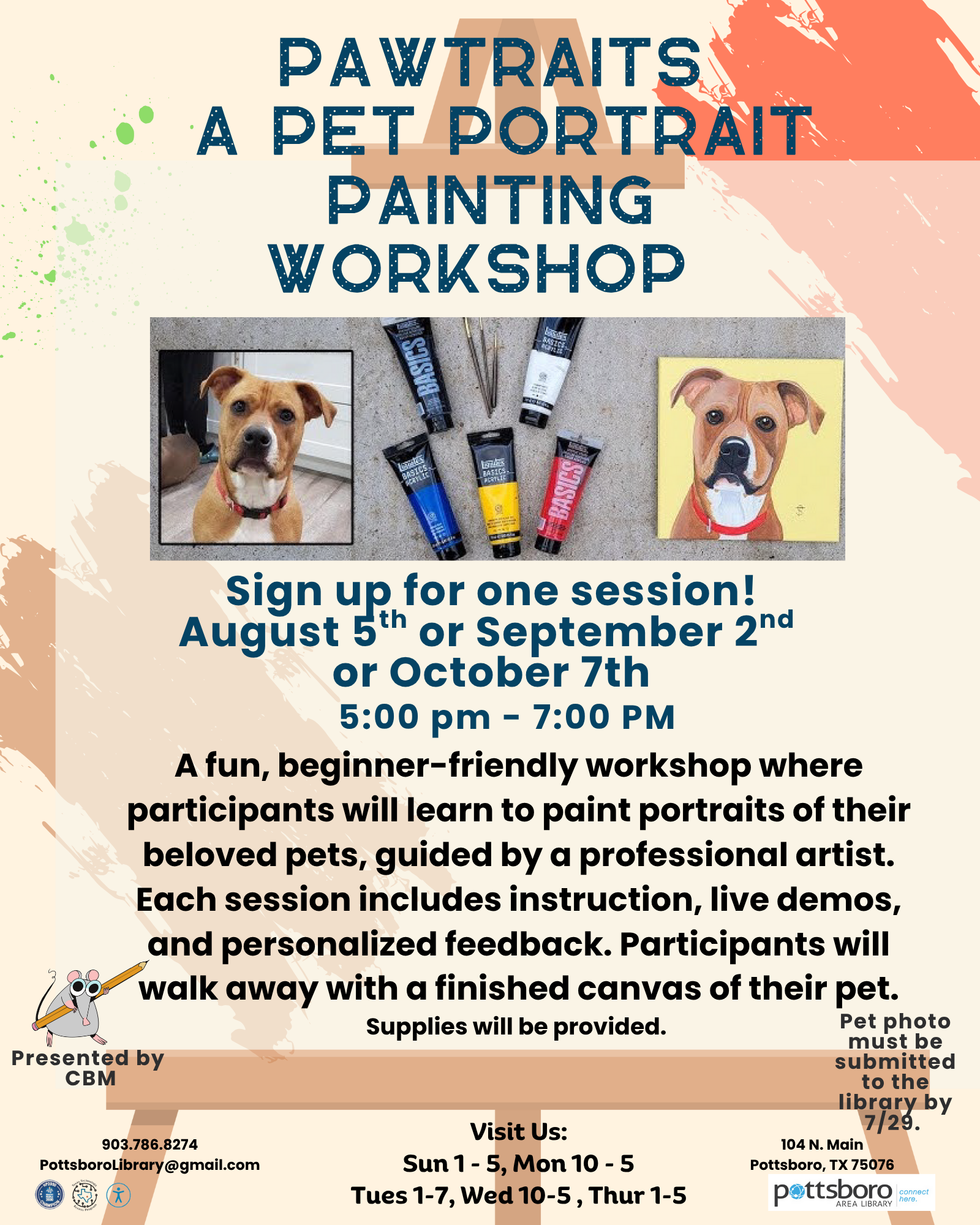
“Teach Your Talent” is a Pottsboro Library program designed to reduce loneliness and build community by encouraging older adults to share their skills and experiences. It began with a social art class series, “Pawtraits,” and expanded into hands-on workshops at community events, where participants both taught and learned creative skills. The program strengthens connections while helping older residents stay socially and mentally engaged.
Advanced Planning
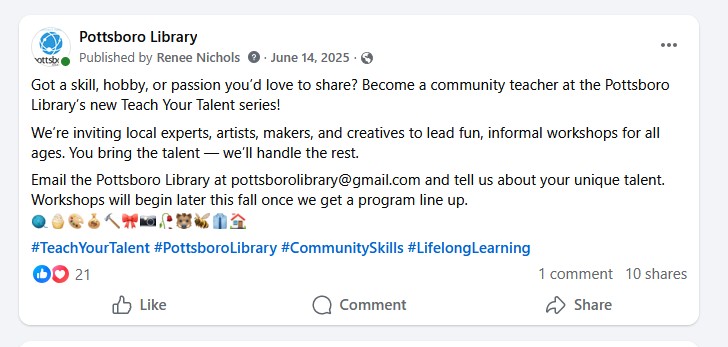
Planning for the "Teach Your Talent" programs began several months before any planned sessions and focused on building a community-led model that highlighted the skills of local residents, particularly older adults. The library initially attempted an open call approach, inviting community members to share their knowledge and talents. This method proved challenging and generated little to no response, as many potential instructors were hesitant to volunteer or did not see themselves as “teachers.”
Based on this experience, library staff refined the concept and formalized the program as "Teach Your Talent", shifting to a more intentional and supportive recruitment model. This allowed staff to identify potential partners directly and design program formats that would be accessible and appealing to seniors while also welcoming to the broader community.
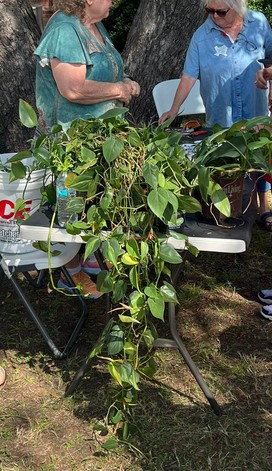
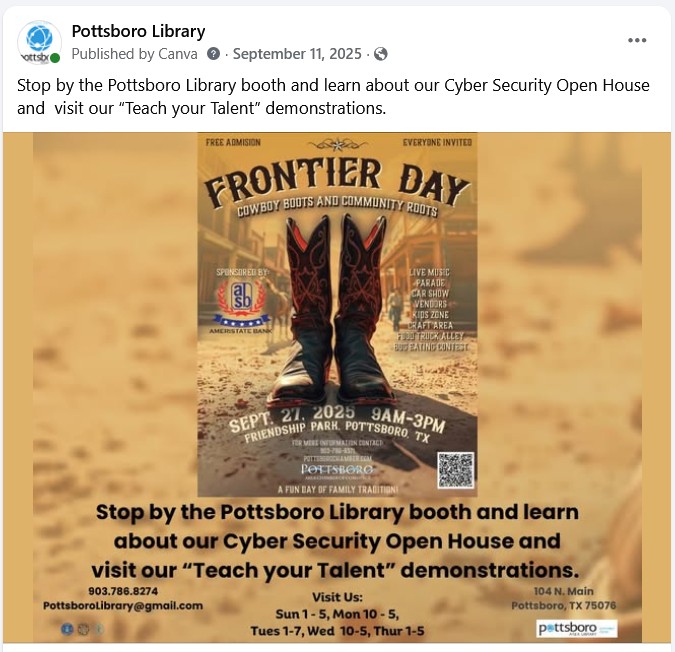
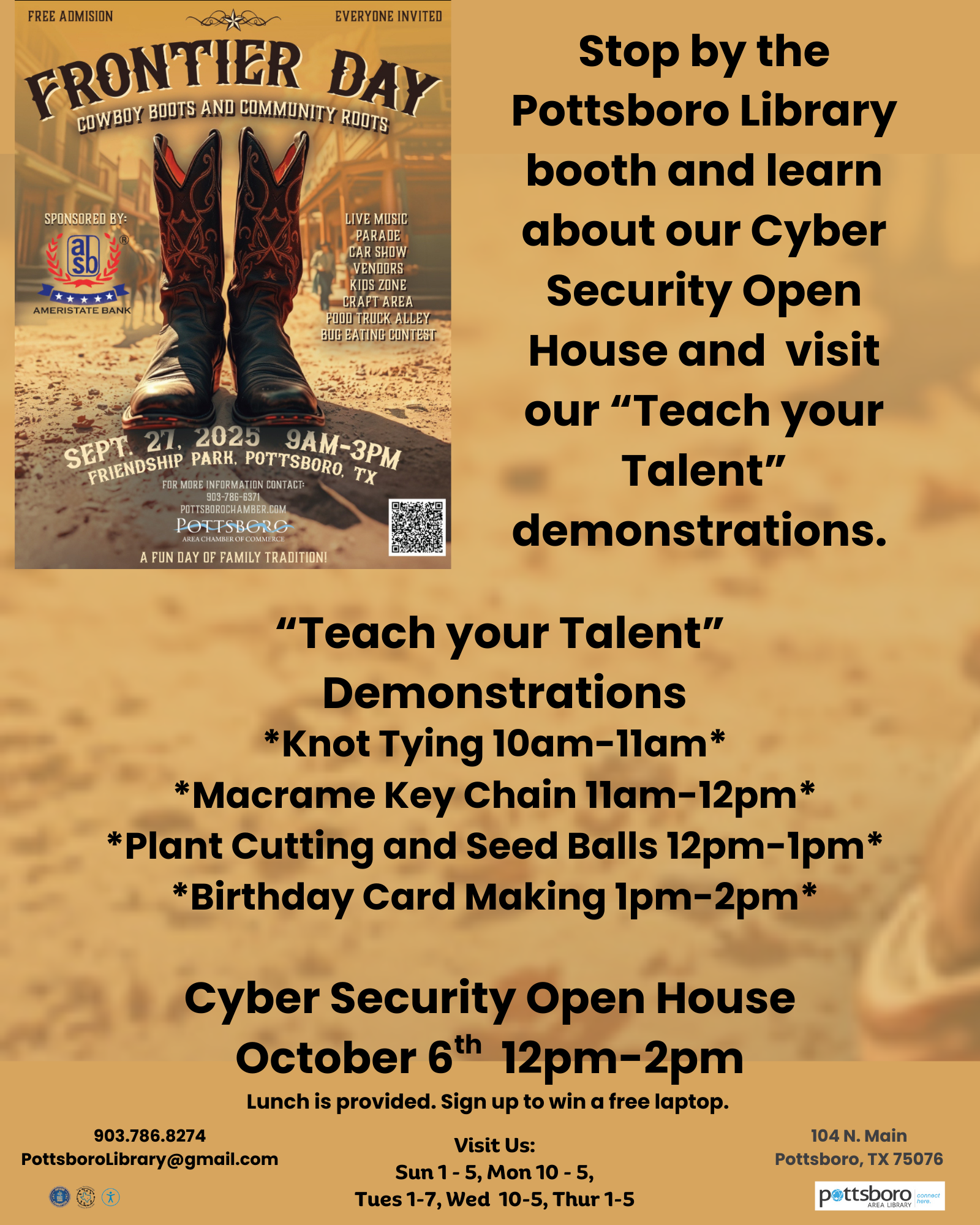
Staff began targeted outreach to known library volunteers, frequent patrons, and community partners who already demonstrated specific skills or interests. Rather than asking generally for ideas, staff invited individuals to share talents they were already confident in, such as art, gardening, crafting, or knot tying. These conversations generated strong interest and helped shape the program’s creative, hands-on focus. This process led to the development of the Pawtraits art classes and later to short, approachable workshops designed for the Frontier Day Festival. Staff collaborated with instructors to select topics that could be taught in engaging, low-pressure formats suitable for both small group classes and large walk-up audiences.
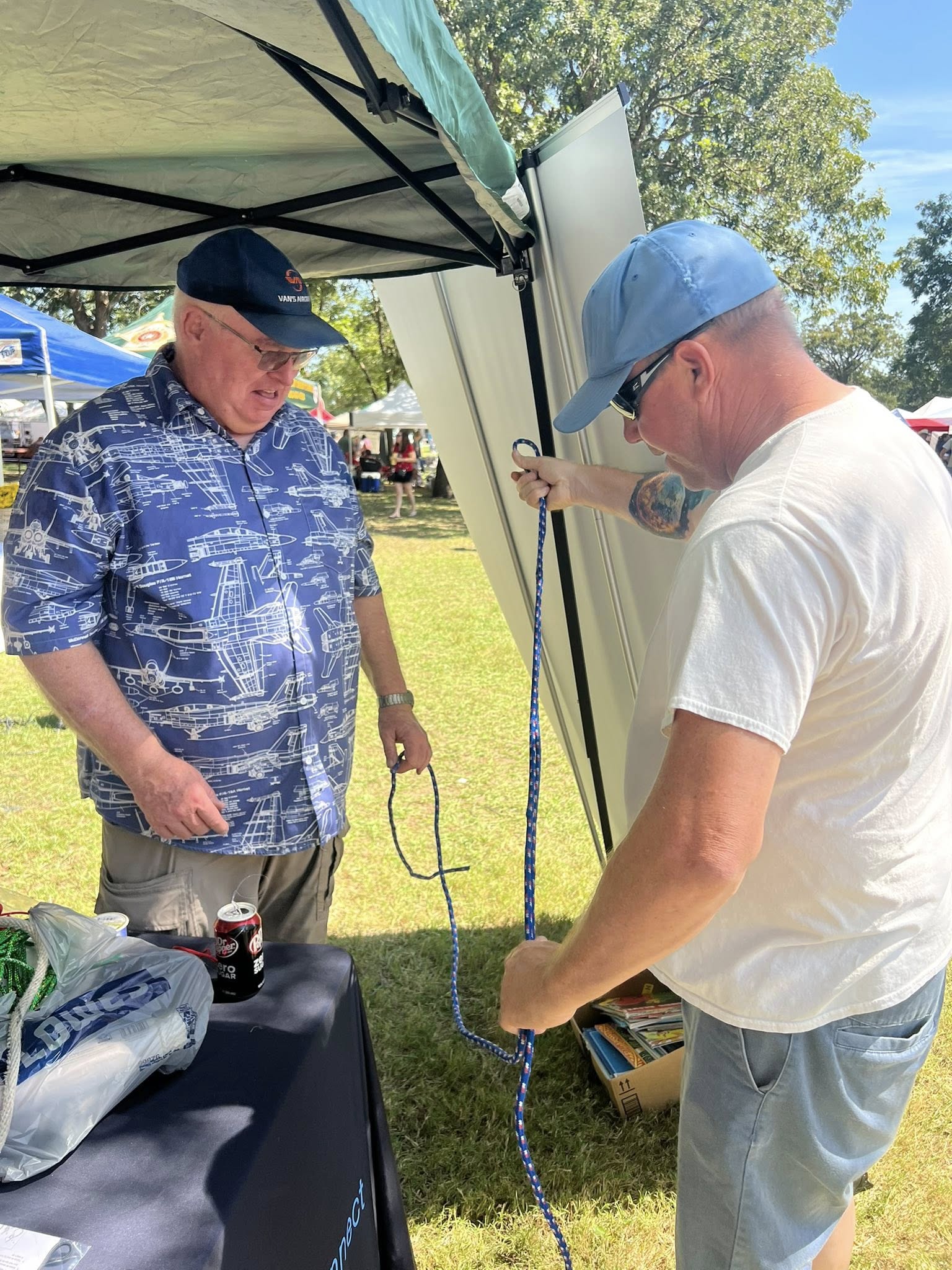
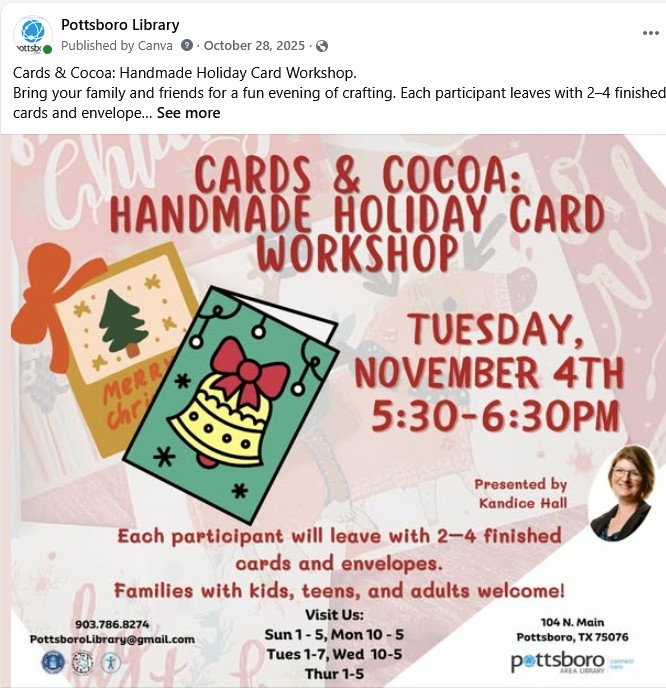
Once topics were finalized, staff recruited community instructors, including a local artist, seniors with knot-tying expertise, Master Gardeners, and a card-making enthusiast. Planning included meetings to discuss lesson ideas, participant needs, time limits, and materials. Special care was taken to support instructors who had never taught formally by offering encouragement, flexible scheduling, practice sessions, and teaching assistance when appropriate.
Library staff coordinated all logistics, including purchasing supplies, preparing activity kits, arranging program layouts, scheduling staff, and coordinating with festival organizers. Staff also created promotional materials such as flyers, newsletter content, and social media posts to ensure consistent outreach.
Through this collaborative planning process, "Teach Your Talent" became a sustainable, community-centered program that empowered older adults as leaders and created meaningful opportunities for learning and connection.
Marketing
Library staff developed a comprehensive outreach plan that aligned with the marketing plan to ensure the program reached older adults who might be experiencing social isolation, as well as the broader community. This included designing and distributing printed flyers throughout the library, the local senior center, local businesses, community bulletin boards, and faith-based organizations. Staff created social media posts highlighting upcoming sessions, instructor profiles, and examples of activities to generate interest and reduce hesitation among first-time participants. Announcements were also included in the library’s newsletter, website calendar, and during other library programs that served older adults.
In addition to formal marketing channels, staff relied heavily on relationship-based outreach. Library employees personally invited regular patrons, contacted past program participants, and encouraged partners to share information through their own networks. This word-of-mouth approach proved especially effective with seniors who were less active online or unfamiliar with social media platforms.
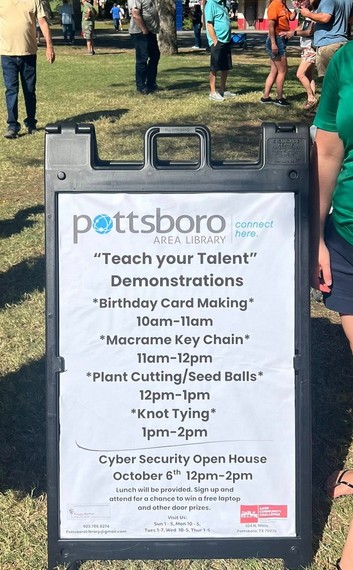
Participation in the Frontier Day Festival required additional coordination with event organizers to align with established festival guidelines. The library submitted program descriptions for inclusion in community event listings, festival schedules, and promotional materials distributed by the organizers. Staff also worked to ensure the workshops were clearly labeled as free, family-friendly, and open to all ages to encourage walk-up participation.
Together, these outreach strategies helped build strong attendance, increased repeat participation, and positioned "Teach Your Talent" as a welcoming and trusted community program.
Budgeting
It was very helpful to have the following $2,500 budget supported by the Peggy Barber Tribute Grant. We did find that most of our volunteers would have assisted without payment.
- $200 on marketing
- $1850 on supplies for sessions
- $450 on funds for volunteers to support their organization
Day-of-event Activity
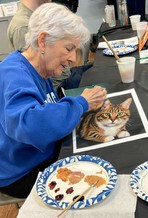
For the Pawtraits classes held at the library, the setup included arranging tables and chairs in a cluster, preparing individual art supply kits, covering tables, setting up display space for examples, and creating a welcoming check-in area. Staff began preparing approximately one hour before each session to complete oom setup and organize materials. One staff member was present during each class to manage sign-ins, assist participants, support the instructor, and handle clean-up. A similar setup and support were provided for the knot-tying and card-making sessions as well.
For the Frontier Day Festival workshops, set-up required additional planning and coordination. Library staff transported supplies to the festival site, assembled portable tables and chairs, created clearly marked activity stations for each workshop, posted signage, and organized materials into easy-to-access bins for quick transition. Staff arrived two hours before the festival opened to complete setup and coordinate with event organizers. During the festival, three to four staff members were scheduled at all times to manage participant flow, restock supplies, assist instructors, and answer questions from the public.
We had several unexpected challenges when looking back on the program. We had to pivot on our original idea after a low response from the community. We were very happy with our end result, "Teach Your Talent" idea, though. Varied participant skill levels, especially among the kids, required staff and instructors to provide extra one-on-one assistance.
We also learned that the staff needed to learn the basics of some of the activities since we ended up assisting the teacher. Higher-than-expected attendance at some festival activities required restocking supplies and adjusting activity pacing to ensure we remained on schedule. Time management during walk-up sessions required flexibility to ensure participants could complete
activities without long wait times.
Program Execution
Overall, the library was extremely pleased with the outcomes of the "Teach Your Talent" program. The strong attendance, high level of participant engagement, feedback, and enthusiasm from both instructors and attendees demonstrated the program’s success in meeting its goals. Older adults embraced the opportunity to learn, teach, and connect with others, while families and younger participants benefited from the welcoming, intergenerational environment.
The program not only reduced social isolation by creating consistent opportunities for connection but also strengthened community pride by showcasing the talents and knowledge already present in Pottsboro. Many participants expressed interest in attending future sessions or volunteering as instructors themselves, indicating the program’s sustainability and long-term value.
"Teach Your Talent" reinforced the library’s role as a trusted community hub and creative learning space. Based on the positive feedback and strong community response, the library plans to continue and expand this program to include additional topics, partners, and outreach opportunities in the future.
Advice
Start with small, simple, social activities and invite community members, especially older adults, to share their skills in a relaxed, welcoming environment.
Focus on connection over perfection, build in time for conversation, and partner with local groups to expand reach and support.
Collaborate with community partners to leverage their reach and expertise.
Take programs outside of the library and encourage participants to be both teachers and learners, helping to strengthen community ties, while sharing stories of impact can build momentum and support for future growth.
Supporting Materials
Slideshow Images
More Programs
Legacy Story Project
Audiences:

Slide Night
Audiences: