The guide also offers practical, detailed examples of successful and innovative programs drawn from diverse public library settings. The examples illustrate how libraries can effectively adapt these program models by leveraging local partnerships, enhancing digital and eHealth literacy, optimizing accessible spaces, and employing inclusive and culturally responsive outreach practices.
“Digital Pathways: Online Health Literacy Programming for Adults”, a guide for libraries, contains information on understanding online health literacy and telehealth, lessons on video visits and privacy, best practices, and replicable programming ideas with budget tiers and assessment tools to adapt with confidence. The 100-page guide also explores what library workers can and cannot do in non-clinical settings.
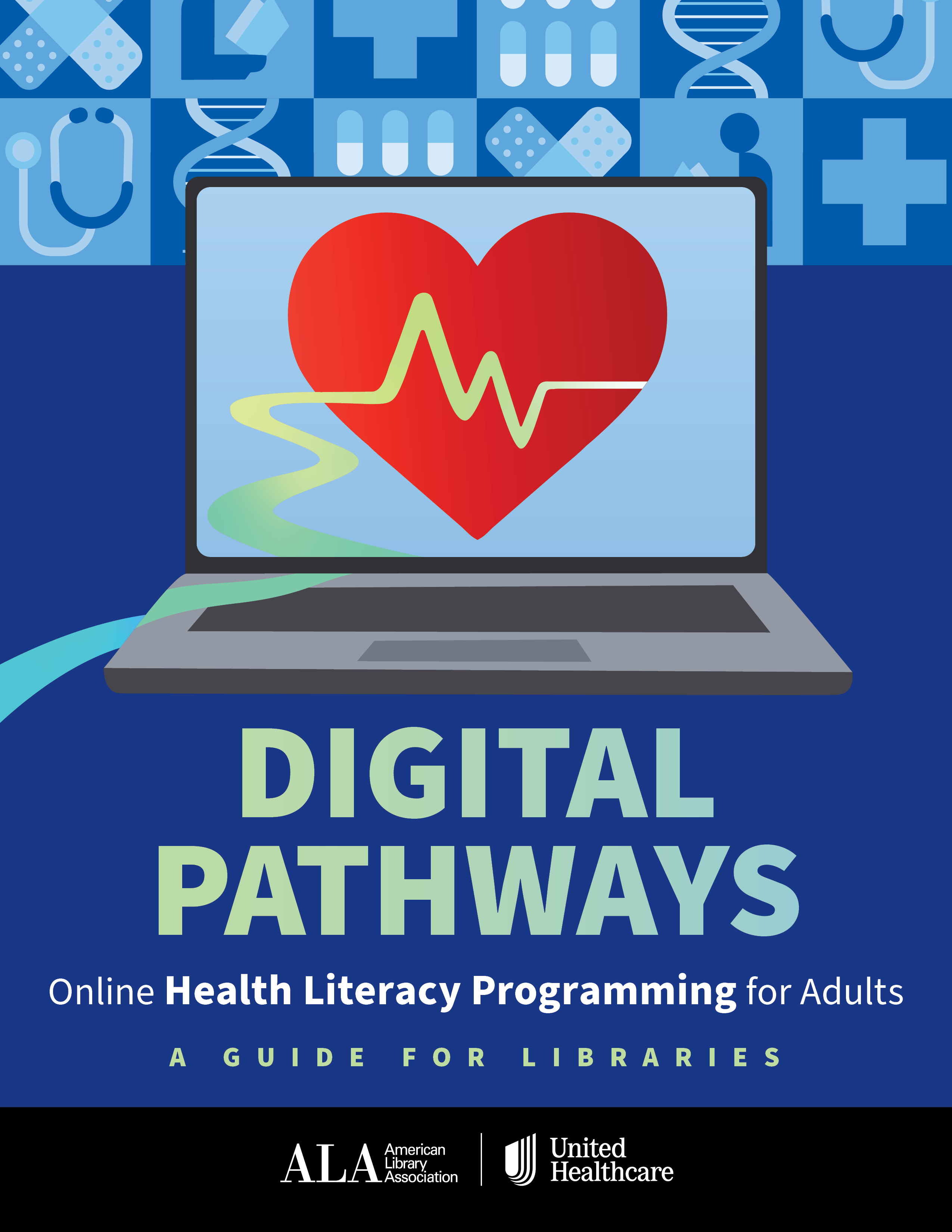
In the guide, library workers may explore library program ideas with detailed staffing and setup notes, budgets and potential partners. Example programs include:
- Navigating Benefits Portals for Medicaid, Medicare, and Marketplace platforms
- Mobile Health Library Outreach
- Multilingual Digital Health Literacy Series
- Text a Librarian Health Help Line
“Digital Pathways: Online Health Literacy Programming Adults” was created in collaboration with UnitedHealthcare and library thought-leaders, including Marlowe Bogino, medical librarian, Christiana Care Health Libraries; Phoebe Chastain, capability manager, UnitedHealthcare; Arlisa Harris, director, Forrest City Public Library; Dr. Kate Mercer, engineering liaison librarian, University of Waterloo Library; Brian Russell, deputy director, ALA Public Programs Office; Dr. Witt Salley, adult and teen services librarian, Montgomery County Public Libraries.
To learn more about the program and to download the free programming guide, please visit https://www.ala.org/tools/programming/digitalpathways.
This project is developed with the support of UnitedHealthcare.