Stitched Stories: Where Quilting, Literacy, and Elders Meet

Presented at the ALA Annual Conference 2026 in Chicago by Casandra L. Allen, Betty Turner, Alyssa Leonard, and Tiffeni Fontno.

Long before quilting became a hobby, it was a language. In the African American tradition, quilting is both practice and philosophy — a testament to survival, an act of love, and a quiet declaration of liberation. Its deepest theories were never written in textbooks; they were pressed into fabric at kitchen tables and in quilting circles, carried in the hands and wisdom of Black grandmothers.

Stitched Stories was built to put that inheritance directly into young people’s hands. Developed by Tiffeni Fontno, Education Librarian and ABC Quilters — a community-based organization that preserves quilting as an educational tool and links it to STEM, history, and storytelling — the program pairs picture books with needle and thread. Students read, discuss, design, and sew. The book sets the creative intention; the fabric carries it forward.

The ALA Annual Conference panel brought four perspectives: Casandra L. Allen, Betty Turner, and Alyssa Leonard, all quilters and educators, and Tiffeni Fontno, educator and literacy advocate. Their shared framework is what they describe as an African American Elder Womanist approach — knowledge passed down, hand to hand, generation to generation.

The Pilot

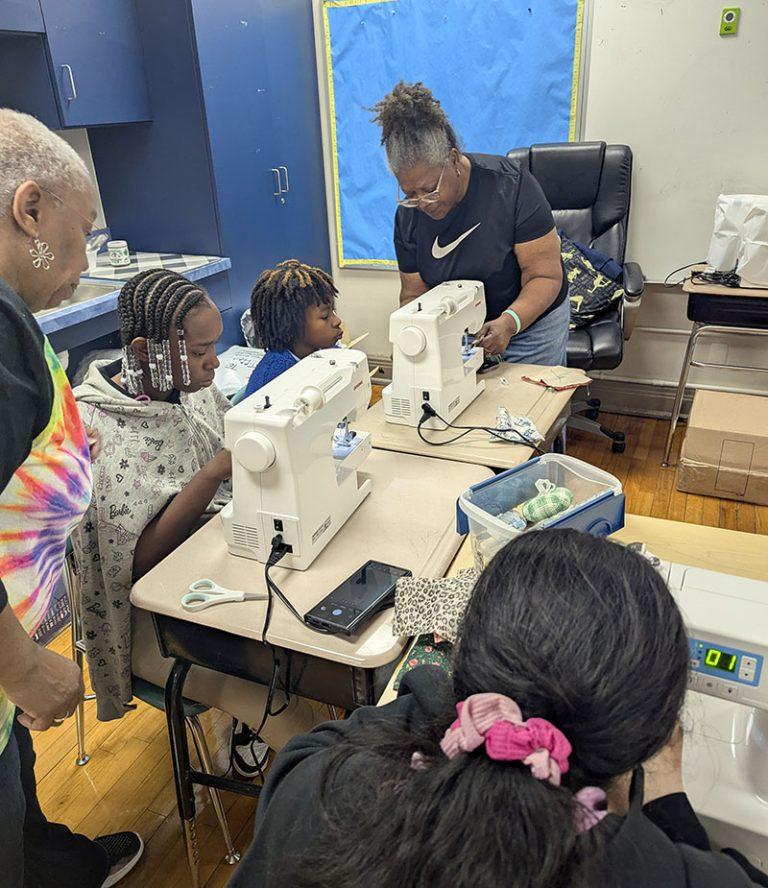
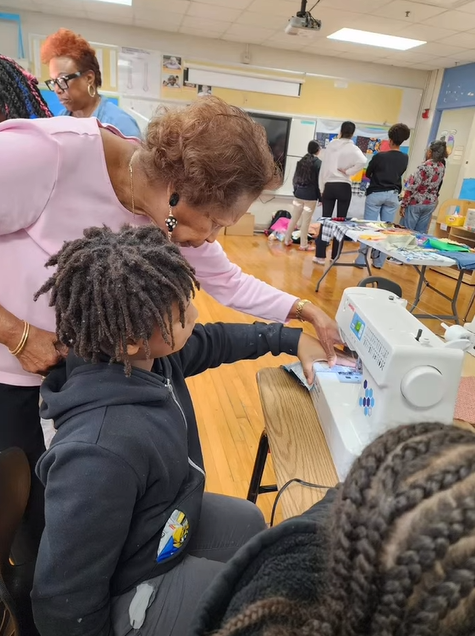
The pilot ran at Ida B. Wells Elementary School in Nashville, Tennessee, with six students, eight sewing machines, and six weeks.

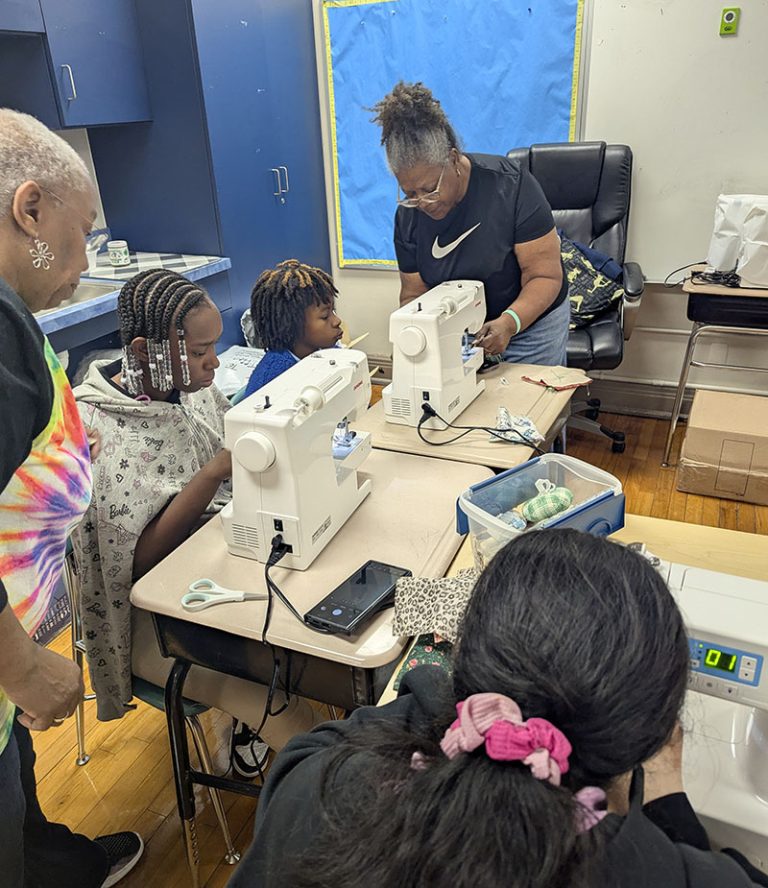
Week one covered tools, safety, and straight-line practice. In week two, students joined their first fabric pairs, made pouches and pillows, stitched their own names, and met the first book. Week three introduced fabric choice, seam alignment, and the meaning of quilt block symbols. By week four, students were sewing rows together and laying out blocks on a design wall. Week five brought in the community quilt — individual work joining into something collective. Week six was final assembly: the quilt sandwich, batting and backing, straight-line quilting, and a label.

The Books

Four titles anchored the sessions:

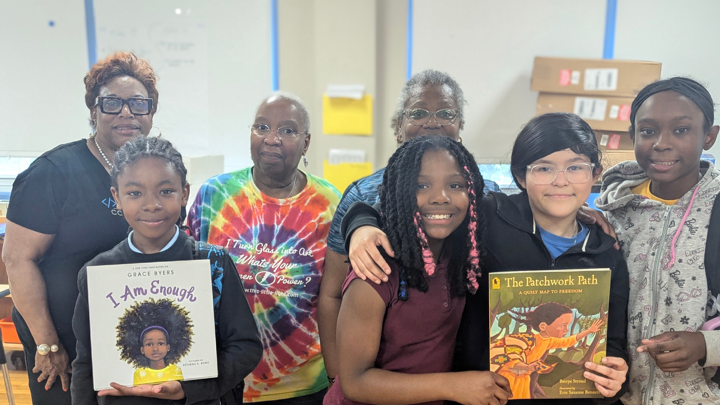
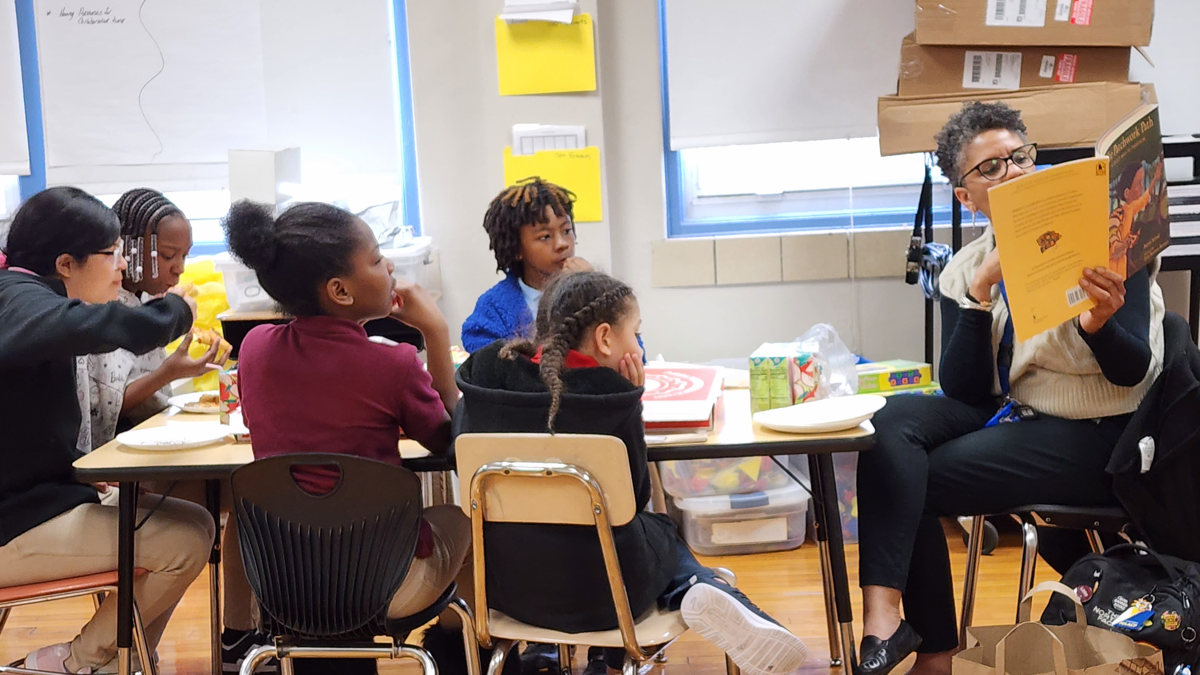
Librarian, Tiffeni Fontno, provided the read-alouds, which opened into a discussion, and each discussion into a design decision. After reading I Am Enough, students made a block bearing their name and a positive image. Charles and His Gee’s Bend Quilt brought the Gee’s Bend quilters of Alabama into the room, and their improvisational geometry into the students’ layouts.
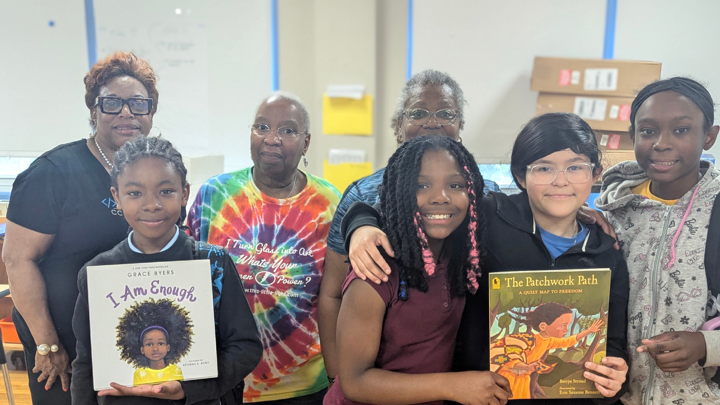
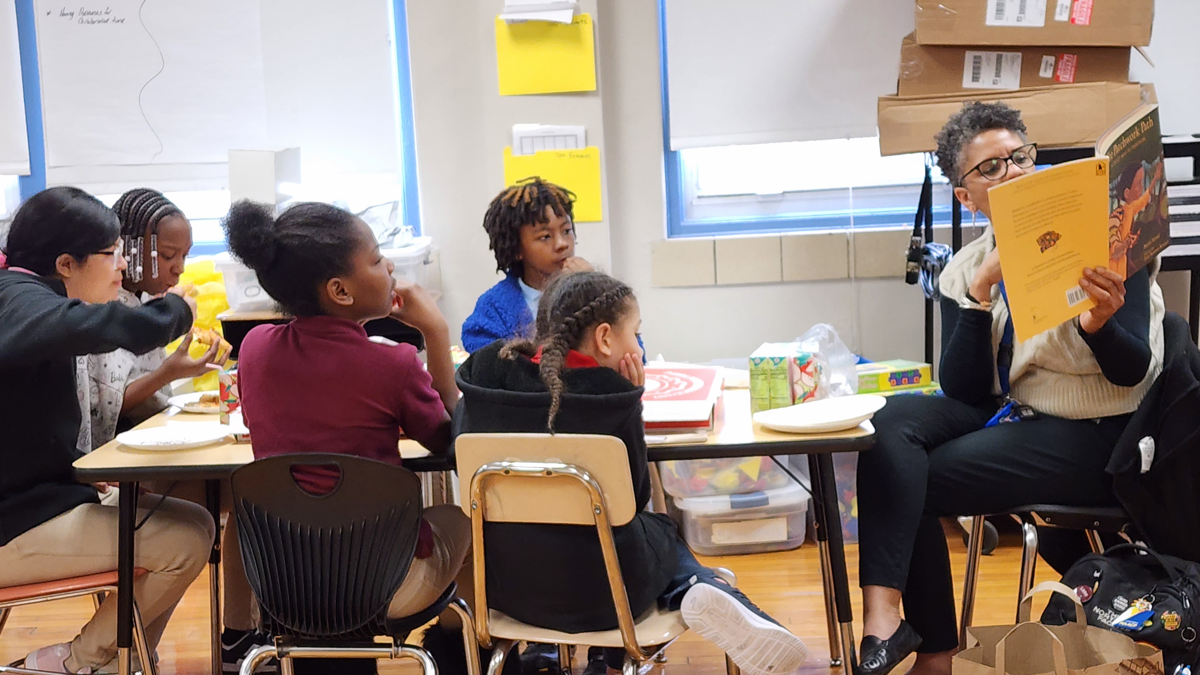
The program ran at Ida B. Wells Elementary School with six students, eight sewing machines, and six weeks.

"The book sets the creative intention; the fabric carries it forward."

"In the beginning I was about to drop out but then I believed in myself.”

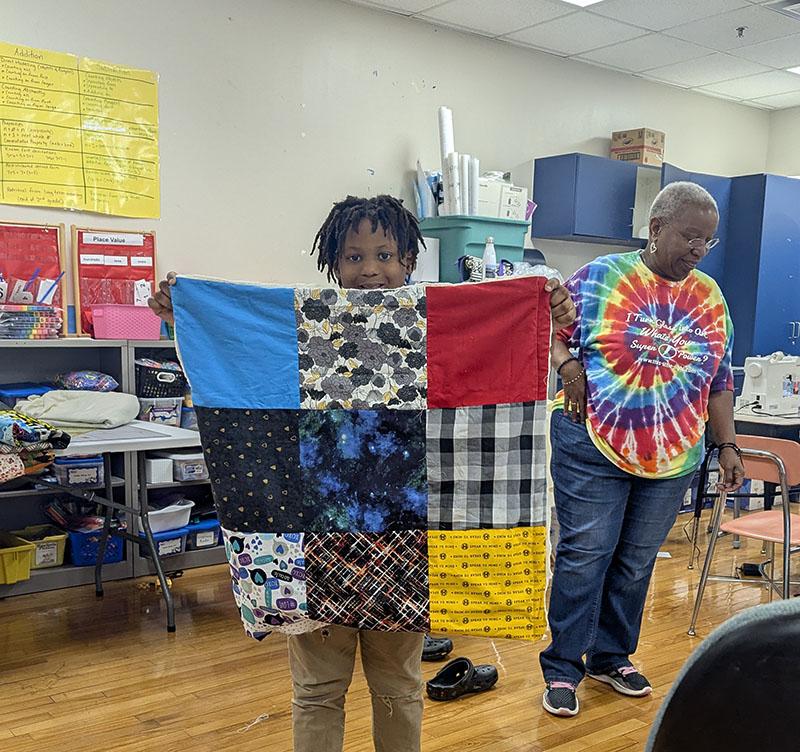
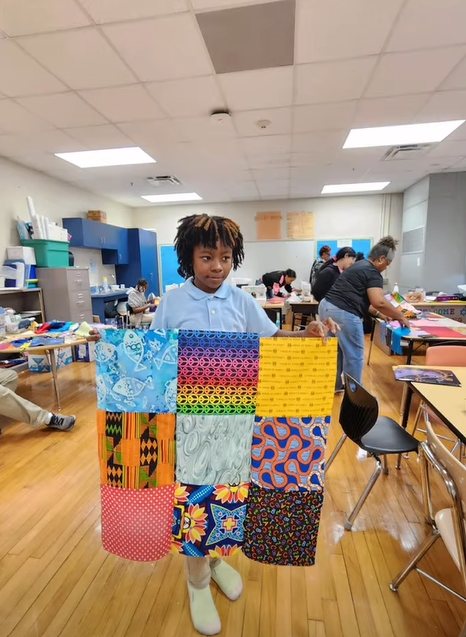
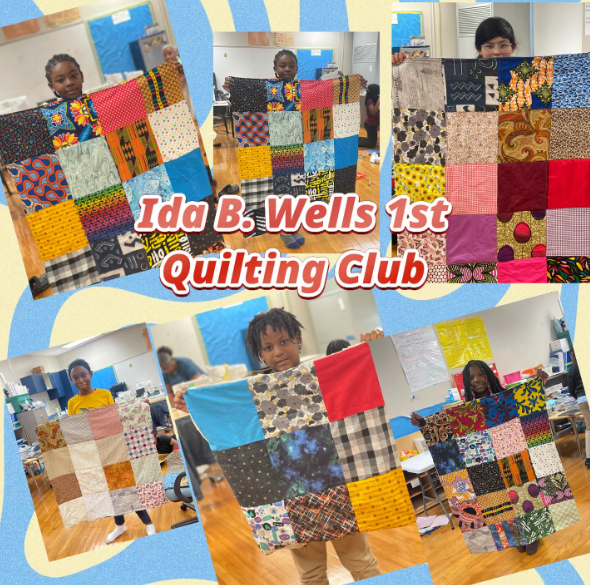
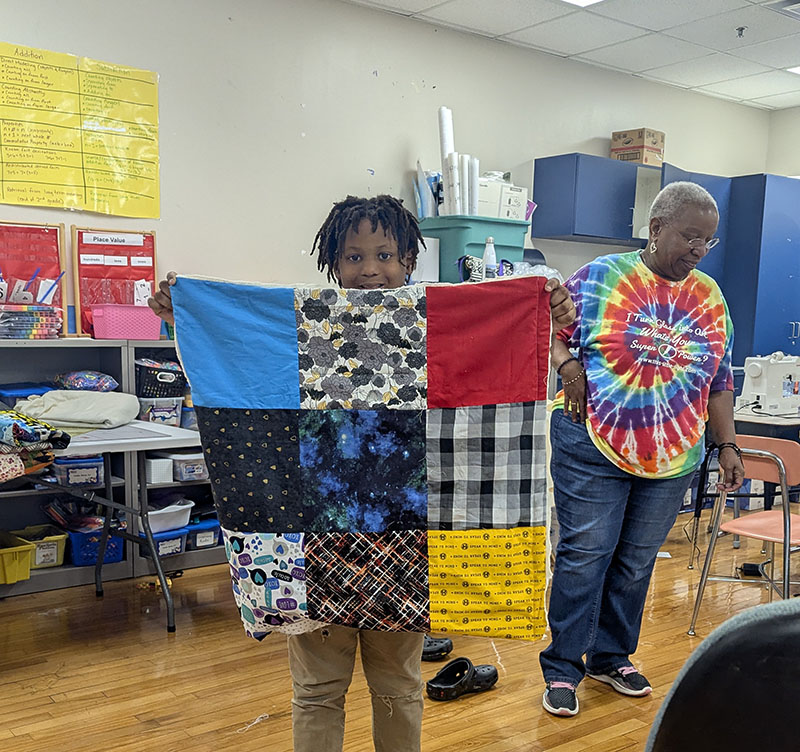
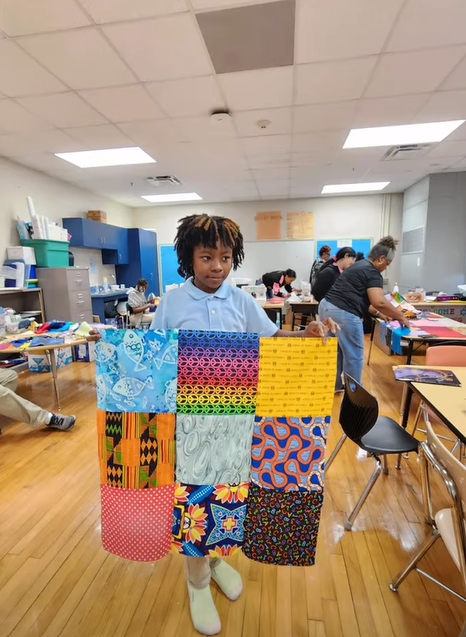
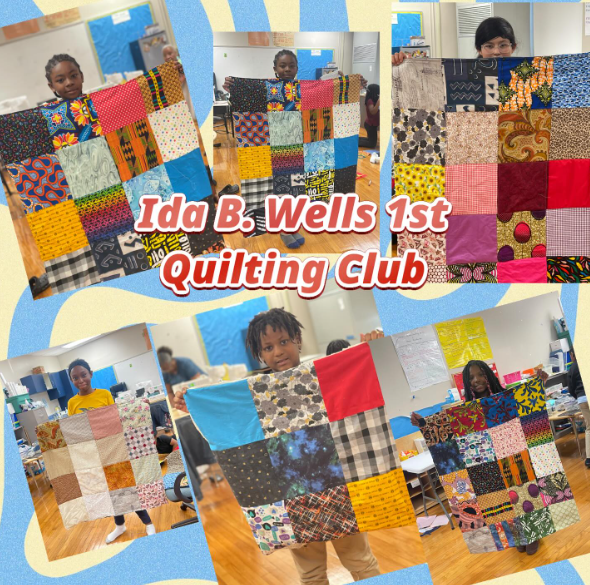
Proud quilters!

Proud quilters!

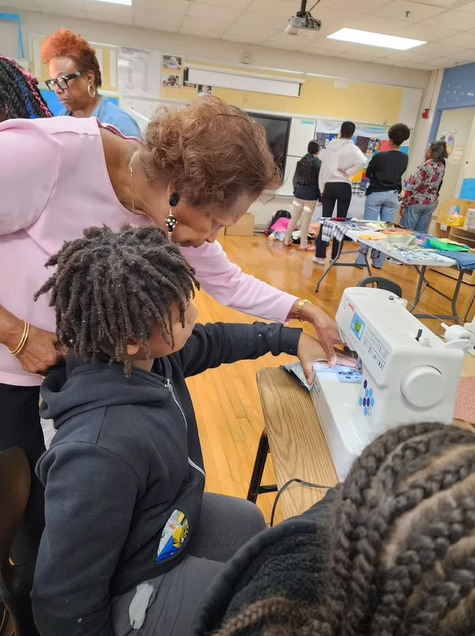
Casandra L. Allen, Betty Turner, and Alyssa Leonard, all quilters and educators, share a framework they describe as an African American Elder Womanist approach — knowledge passed down, hand to hand, generation to generation.

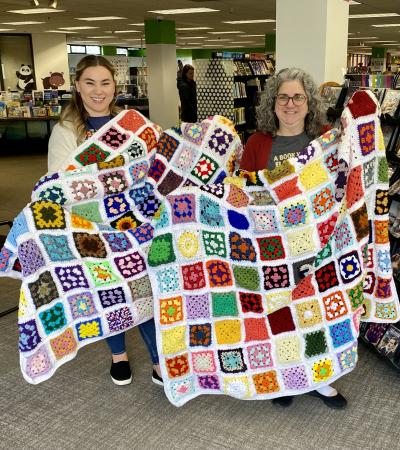
Finished products!

thumbnail
thumbnail
thumbnail
thumbnail
thumbnail
thumbnail
thumbnail
Image
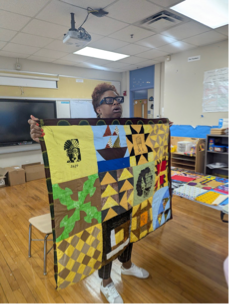
Alyssa Leonard presents her quilt to the class.

A Quilt in the Room

The turning point came when Alyssa Leonard brought in one of her own quilts. It carried the symbols associated with the Underground Railroad quilt code — the same symbols students had just met in The Patchwork Path: A Quilt Map to Freedom, the story of an enslaved girl reading a quilt as a map to freedom. What had been a story on a page was suddenly an object in front of them: stitched, held, turned over, examined up close. 

The response was immediate.

“Oh, I want to learn that!”

“I learned about Gee’s Bend. I learned quilts are used for codes.”

“I want to show this to my grandma."

That last comment says a great deal about what the program delivers. Students weren’t only learning a craft — they were handed a thread back to their own families. Working alongside veteran quilters who learned from their own elders, they received cultural heritage the way it has always traveled: from an older pair of hands to a younger pair. The intergenerational exchange wasn’t a side effect of the programming. It was the curriculum.

Their reflections showed how much they carried out with them:

"In the beginning I was about to drop out but then I believed in myself.”

“It’s not straight, but I’m okay with it.”

“I’m glad I took this class. It taught me I can do anything.”

Lessons Learned

The team was candid about what they would change. Plan for eight to ten weeks, not six. Design a closing ritual: labeling quilts, writing reflections, and sharing the work turned the last session into something students carried with them. Feed the students — a real snack break bridged read-aloud and sewing time. Allow individual pacing, letting fast finishers move to the community quilt. Source fabric locally through guild donations, estate sales, and yard sales. And ownership matters: students who labeled their quilts and took them home showed the deepest pride in the work.

Replicate It

Partner with a local quilt guild for educator volunteers, fabric donations, and machine loans. Choose two or three picture books about quilting or cultural identity. Budget for two quilter educators, one table per student, a cutting table, an ironing station, and a design wall. A community grant of $5,000–$10,000 can fund a full pilot. Then exhibit the finished quilts — an exhibition turns participants into artists and invites the whole community in.