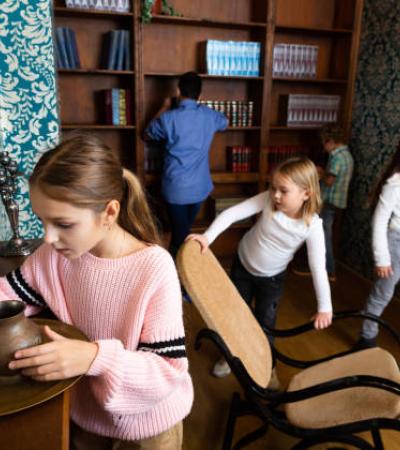
Escape to Independence was designed as a self-guided, drop-in escape room that families could complete at their own pace. Instead of requiring scheduled time slots or staff-led facilitation, participants worked through four independent puzzle stations scattered throughout the room.
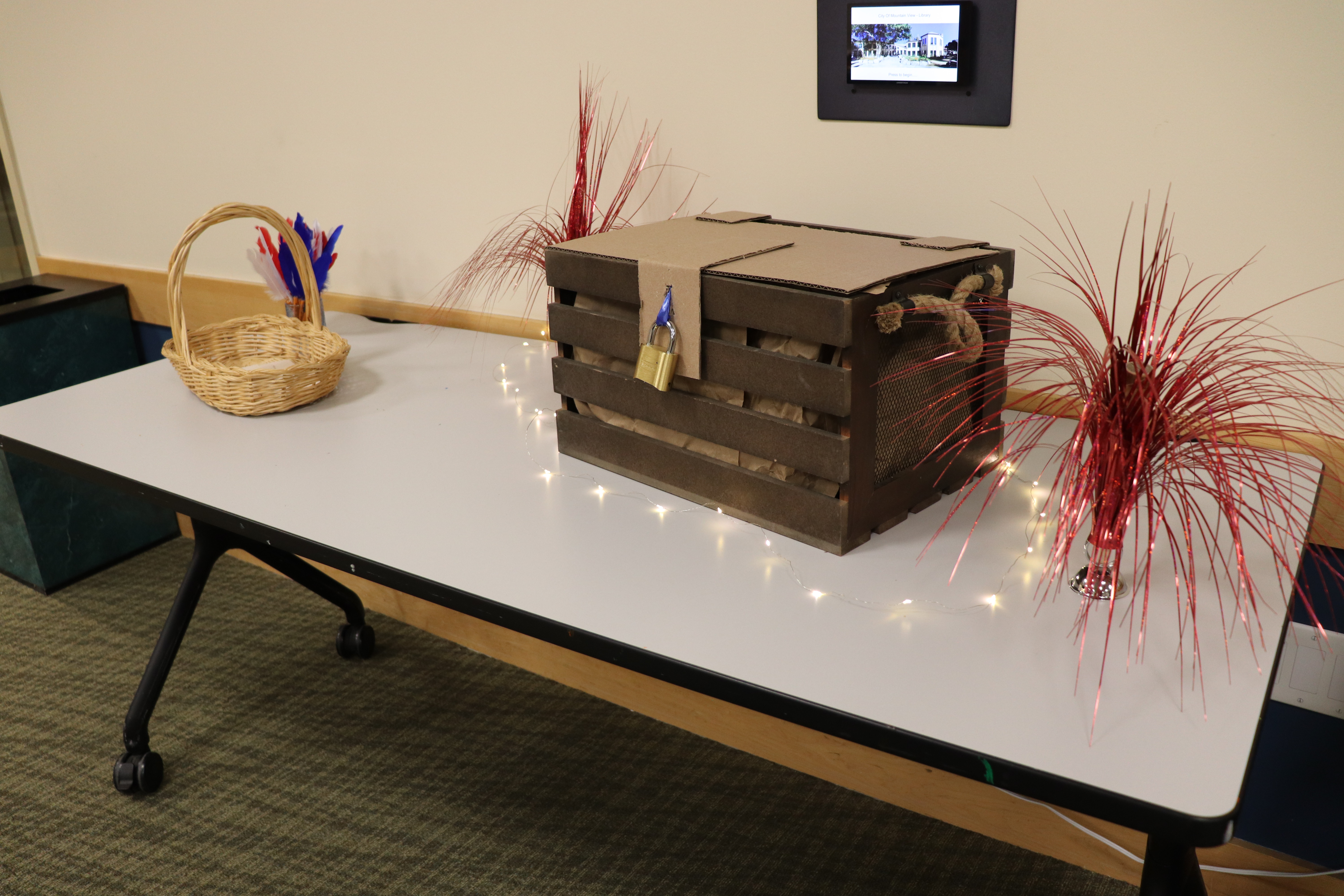
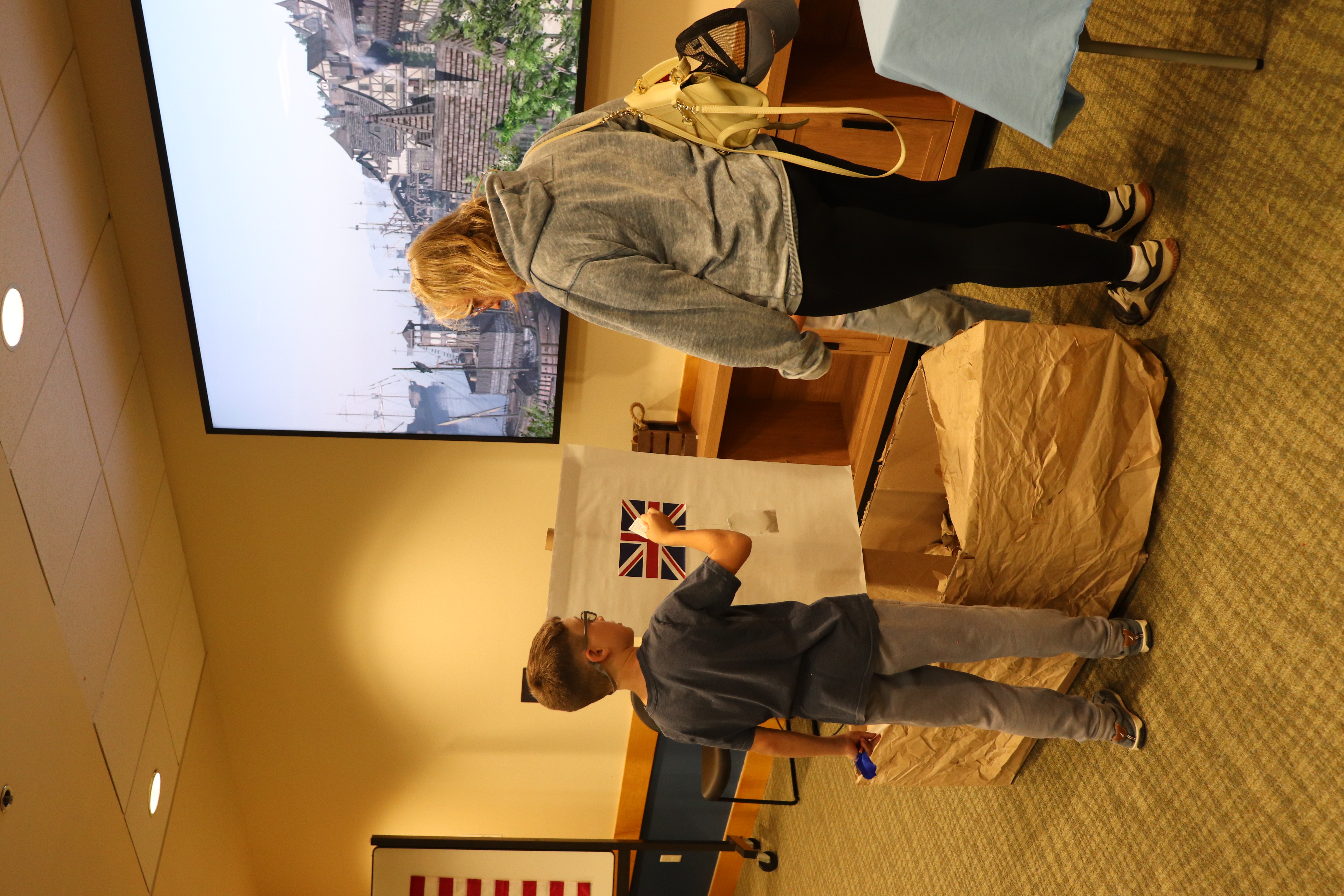
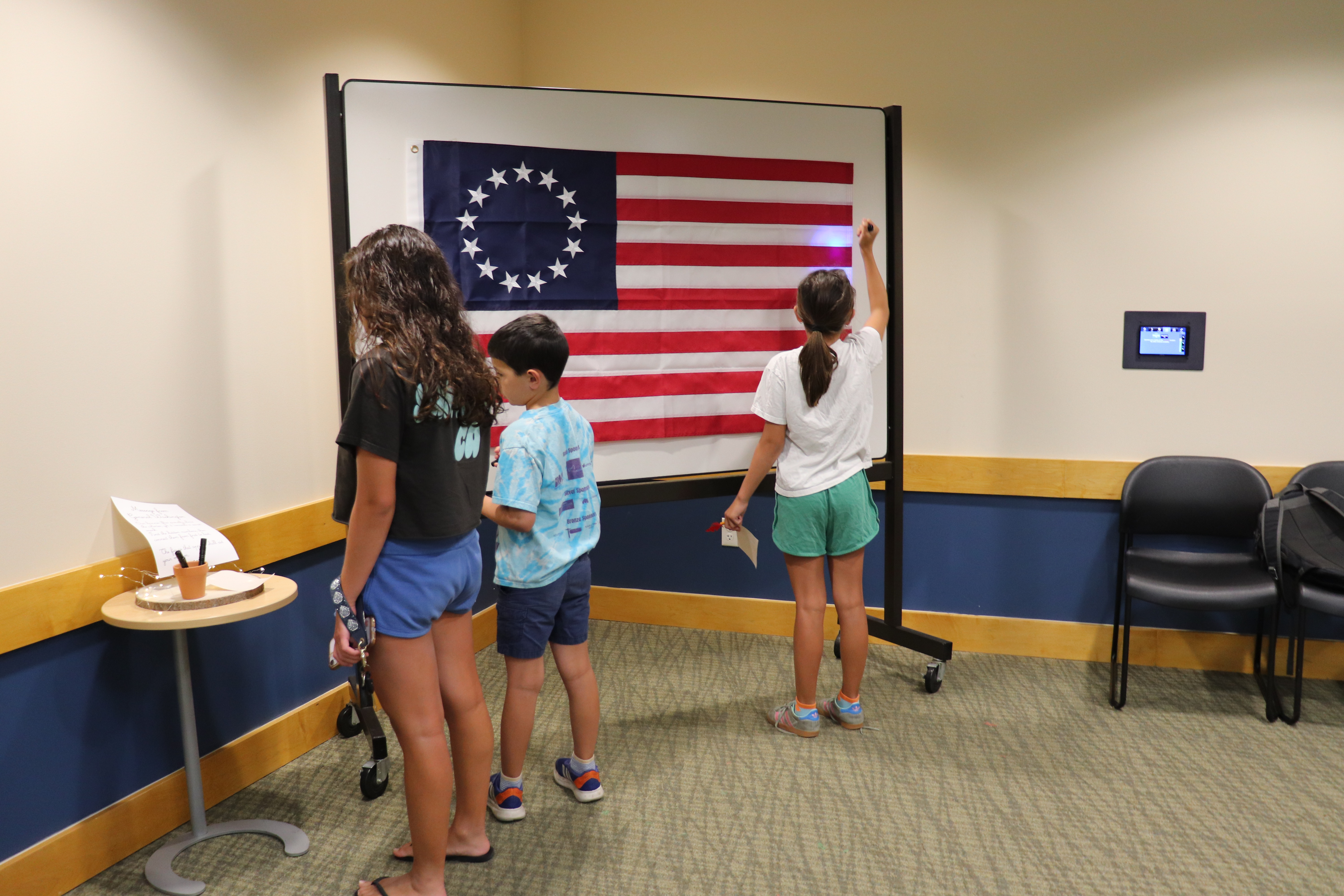
Each puzzle highlighted a different event or symbol from the American Revolution, including the signing of the Declaration of Independence, Paul Revere's Ride, the Boston Tea Party, and the flag of the original thirteen colonies. Solving each puzzle revealed one digit of a four-digit lock combination. Once participants unlocked the treasure chest, they received a commemorative "History Hero" medal.
The program encouraged observation, collaboration, and historical curiosity while remaining accessible to a wide range of ages.
Advanced Planning
Planning began approximately one month before the program. I wanted to create an activity that celebrated the United States' 250th anniversary while giving families an engaging reason to explore important moments from the Revolutionary era.
I first selected four historical topics that most participants would recognize with a little investigation. Rather than relying on trivia alone, each station required participants to closely examine maps, artwork, or physical objects to discover the answer.
Most of the materials were designed in Canva and printed in-house. The treasure chest, directional signage, and prize medals were assembled during the weeks leading up to the event.
One challenge was balancing puzzle difficulty. I wanted children to experience success while still giving adults something enjoyable to solve. Testing each puzzle with coworkers helped identify clues that needed additional guidance.
Marketing
The escape room was promoted through the library's event calendar, social media, printed flyers, and Summer Reading promotions. Because it was available as a drop-in activity, families could participate whenever it fit their schedule during the event.
The patriotic theme also made it a natural addition to other library celebrations surrounding the nation's 250th anniversary.
Budgeting
Costs included:
- Combination lock
- Commemorative medals and ribbon
- Printing supplies
- Miscellaneous craft materials
- Invisible Ink
- UV Flashlights
Many components were created using existing library supplies, helping keep costs low. The largest expenses, the combination lock and UV flashlights, were one-time purchases that can be reused for future escape rooms and other library programs. Future versions could reduce costs even further by replacing the commemorative medals with stickers, bookmarks, or printable certificates.
Day-of-event Activity
Setup took approximately one hour. The four puzzle stations were arranged around the room with enough space for multiple families to work independently.
Only one staff member was needed to answer occasional questions, reset the stations, and award medals. Because each puzzle was independent, participants naturally spread throughout the room instead of forming long lines.
Program Execution
Participants entered the room, received a brief introduction, and began searching for clues. Each completed puzzle revealed one number needed for the combination lock. Once all four numbers were collected, participants opened the treasure chest and earned a History Hero medal.
The self-guided format worked well because families could collaborate naturally, younger children contributed observations, and adults often helped interpret clues without taking over the experience.
The program successfully transformed historical content into an interactive experience that encouraged teamwork, close observation, and discussion about Revolutionary history.
Advice
Keep the puzzles visual rather than text-heavy. Participants of different ages can contribute when clues rely on observation instead of memorized historical facts.
Design each puzzle so it can be solved independently. This prevents bottlenecks and allows participants to work in whatever order they choose.
Finally, don't overcomplicate the experience. Four short puzzles that build confidence are often more satisfying than one extremely difficult escape room. A small prize at the end adds excitement and provides a memorable conclusion.
Supporting Materials
Slideshow Images

More Programs
Harry Potter Escape Room (on a $0 Budget)
Audiences:
The Civic Hub Initiative
Audiences: