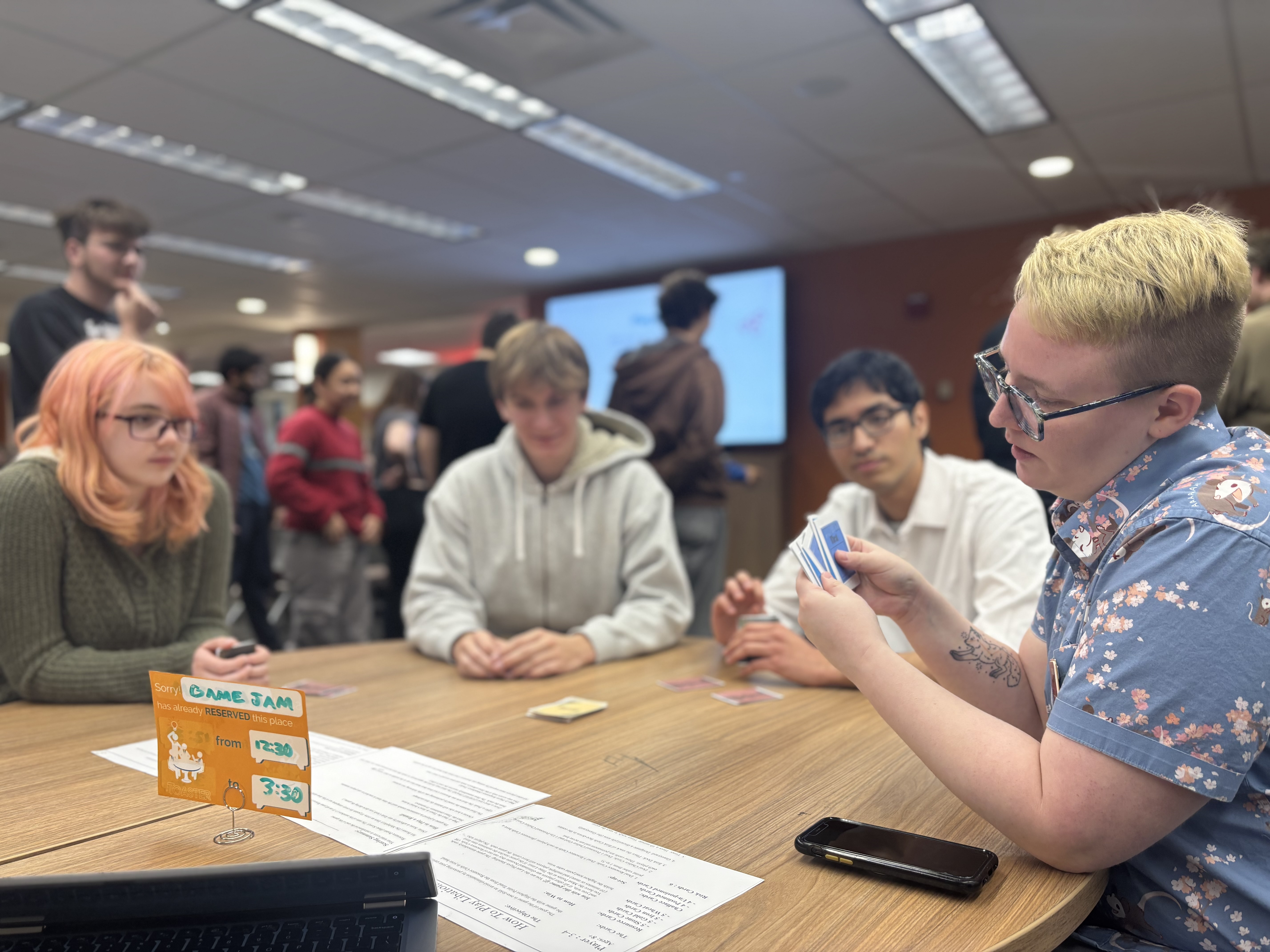
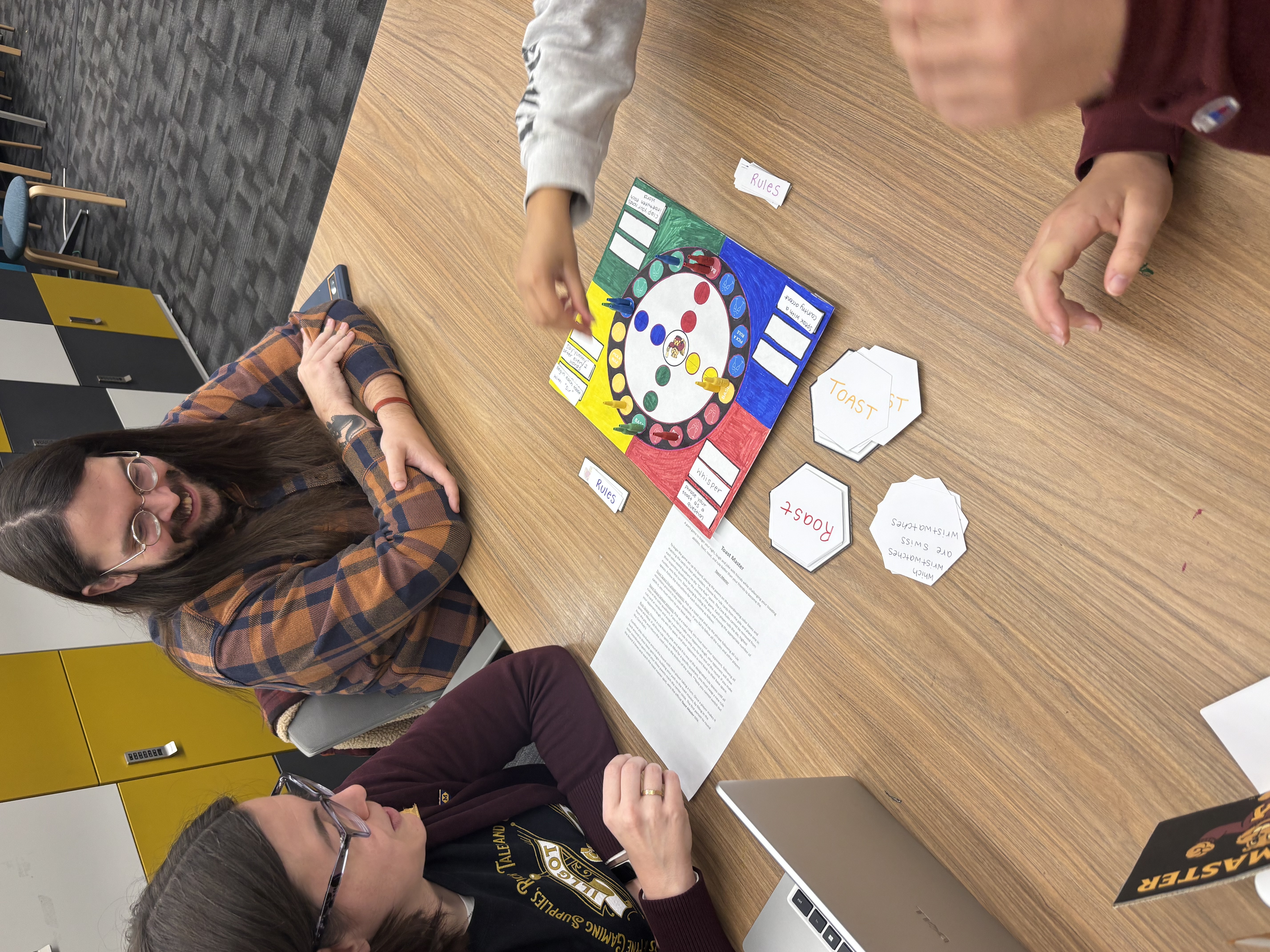
"Tinker at the Toaster" is a semesterly creation and design challenge hosted by the Toaster Innovation Hub at The University of Minnesota Libraries. Each Tinker event is a different challenge; in November 2025, this event was hosted as a Game Jam by Emerson Ironstone, a staff member in the University Libraries. Students had three days to create a video or board game prototype, with expert help from the University and community, and cash prizes.
Advanced Planning
In November 2025, I hosted a Game Jam through the Tinker at the Toaster program. Game jams are highly collaborative events where participants, working in teams, create a game (board or video) within a limited time frame and with limited resources. This format heightens creativity and innovation, and game jams across the world have produced proof-of-concept experiences that have since been developed into massively successful games.
I chose to run a game jam for two reasons. First, I saw that there were limited resources for students at the University seeking experience in game design, as we do not have a formal game design program, and the jam sought to fill that void. Second, I saw a jam as a potential way for participants to meet people with different skill sets across campus and see the Libraries as a unifying, connecting space. Through the jam, we would also be able to highlight library resources; participants could not purchase materials or assets, so they were highly encouraged to utilize the Libraries’ resources, especially the Makerspaces and online media services and repositories.
I began planning loosely in spring 2025 and hammered out most of the details over the summer. I had great partners in the Libraries and in the Toaster Innovation Hub, which is a partnership between the Libraries and the Holmes Center for Entrepreneurship. I had participated in a jam before, so I had a vague idea of how to run one, but I found additional resources from other public and academic institutions who had documented their game jam experiences.
In terms of planning, I had many elements to consider. Students began to sign up for the jam starting October 1st, and I organized participants into teams based on year, academic program, game design experience, and skills. I reached out to the University and community members who had game design or publishing experience to serve as speakers, experts, and judges throughout the weekend. I worked with the Libraries and the Holmes Center for funding for food and prize budgets; other supplies came out of the Makerspace budget. There were many small details to decide as well, such as judging criteria, rules for finished games, and how we would make the games available in the future. Teams were also given a flash drive they could use to save and share their creations; it came preloaded with a document that contained a schedule, rules, and resources for their games. (That document, for reference, can be found at z.umn.edu/JamDocs25.)
As for challenges: any large event has its many logistical challenges! Especially because this was a weekend event, staffing was a primary concern; we wanted to make both Libraries' makerspaces available for teams, but one is not normally open on weekends. I also needed to figure out how to feed everyone on a budget for 3 days, which was deceptively more difficult than I anticipated. The biggest challenge ended up being restructuring teams day-of, as participants either dropped out over the week before, or never showed to the required kick-off event on Friday night.
Marketing
Marketing was done through several channels. We posted flyers across campus, primarily in the library and in the Toaster, and brought flyers and marketing materials to Library events from the very start of the semester to gauge interest and build excitement. Once registration opened, we shared the link and information with partner newsletters across campus, key faculty teaching game-related courses, and in our Maker Discord channel. We closed sign-ups early at 36 registrants, so marketing was successful in this regard!
The registration form for participants specifically noted that the event was open to all students, undergraduate and graduate, and that no game design experience was required. I structured teams so that someone with game design experience was on each team, but teams also needed artists, writers, general coders, sound designers, etc. Teams also had to pitch their games on Sunday before attendees could play, so having someone familiar with pitching and/or public speaking was helpful. The form also specified that only individuals could sign up, not whole teams, and that one goal of the event was to collaborate with individuals from across campus. Participants could only sign up if they could commit to the mandatory events on Friday (kickoff), Saturday (check-in), and Sunday (pitching and awards).
We also posted information about attending the event on Sunday to play and judge the finished games. This went out to all the same channels as the registration information. We only had a few attendees who were entirely unaffiliated with the event or the participating teams; most attendees were friends of participants or Libraries and Holmes staff. We still had plenty of people to judge, though! For future jam events, I would want to try to get a wider variety of attendees on Sunday and push the marketing harder.
Budgeting
The Holmes Center for Entrepreneurship kindly supported $800 in prize money, and the Libraries kindly supported about $1000 for food.
Food was provided on Friday for dinner and Saturday for brunch. Dinner was provided by Afro Deli and cost around $700; a brunch spread was purchased at Costco and cost around $200. The participants greatly appreciated that food was available, especially during long days of work - the Friday kickoff event ran 3-6pm, and Saturday ran 11am-1pm, but teams were able to continue working together in the Library both days until 8pm. Some teams continued to work in other locations afterward as well. While food was important, if needed, we could have purchased cheaper food options, such as pizza on Friday, and released students at noon to get lunch on their own on Saturday. (Costco was a great choice for a brunch spread on a budget, though! We purchased primarily pastries, fruit, iced coffee and juices.)
We had four prizes, each with a $200 prize (to be divided equally among group members, so about $50 per person). The prizes were Innovation (how new the idea/execution is), Fun (how enjoyable to play), Marketability (how it might do on the market), and Crowd Favorite (voted by people who came to play the games on Sunday). Cash prizes are an established part of the Tinker at the Toaster events, but if needed, we most certainly could've given smaller prizes (or even no cash prizes). Another option could have been to request prize donations from community game stores and publishers - in fact, several offered this when I reached out seeking experts and judges. Prize money was direct deposited to students.
Day-of-event Activity
Each day had different set up requirements. On Friday, I presented information about the jam to participants using Google Slides, while another staff member helped facilitate late check-ins. We also had a student staffer at the Toaster desk (for their regular shift, not for the event) that we could have pulled in to help, but didn't need. Set up included creating and handing out name tags, directing participants to their team table, and handing out materials to each team such as the flash drive. We cleared a space for food and had plates and napkins ready; the event started at 3pm, and food arrived around 6pm. We had community speakers on Friday and Saturday; they sent slides ahead of time, which I incorporated into my slideshow for ease. The Toaster is always set up for presentations with screens and microphones, though we did a tech test about half an hour beforehand.
On Saturday, we set up brunch around 10:30am, and teams arrived at 11am. We only needed one staff member to run Saturday's slides, though we again had a student staffer in the space that we could've pulled in. We had two speakers on Saturday, as well as a couple of community and University game designers who were available from 12-1pm to answer questions. Teams received feedback on their games, though they did not ask many questions of the experts; in part, they had not yet made enough progress to have substantive technical questions.
Most staff were needed on Sunday; we needed help setting up the space for games, as well as individuals to judge them. Just about everyone who came to judge was able to help with set up, though. I had online judging forms available, but at the last minute, I needed to print some copies for those who wanted to take physical notes. The audience choice voting form was online only.
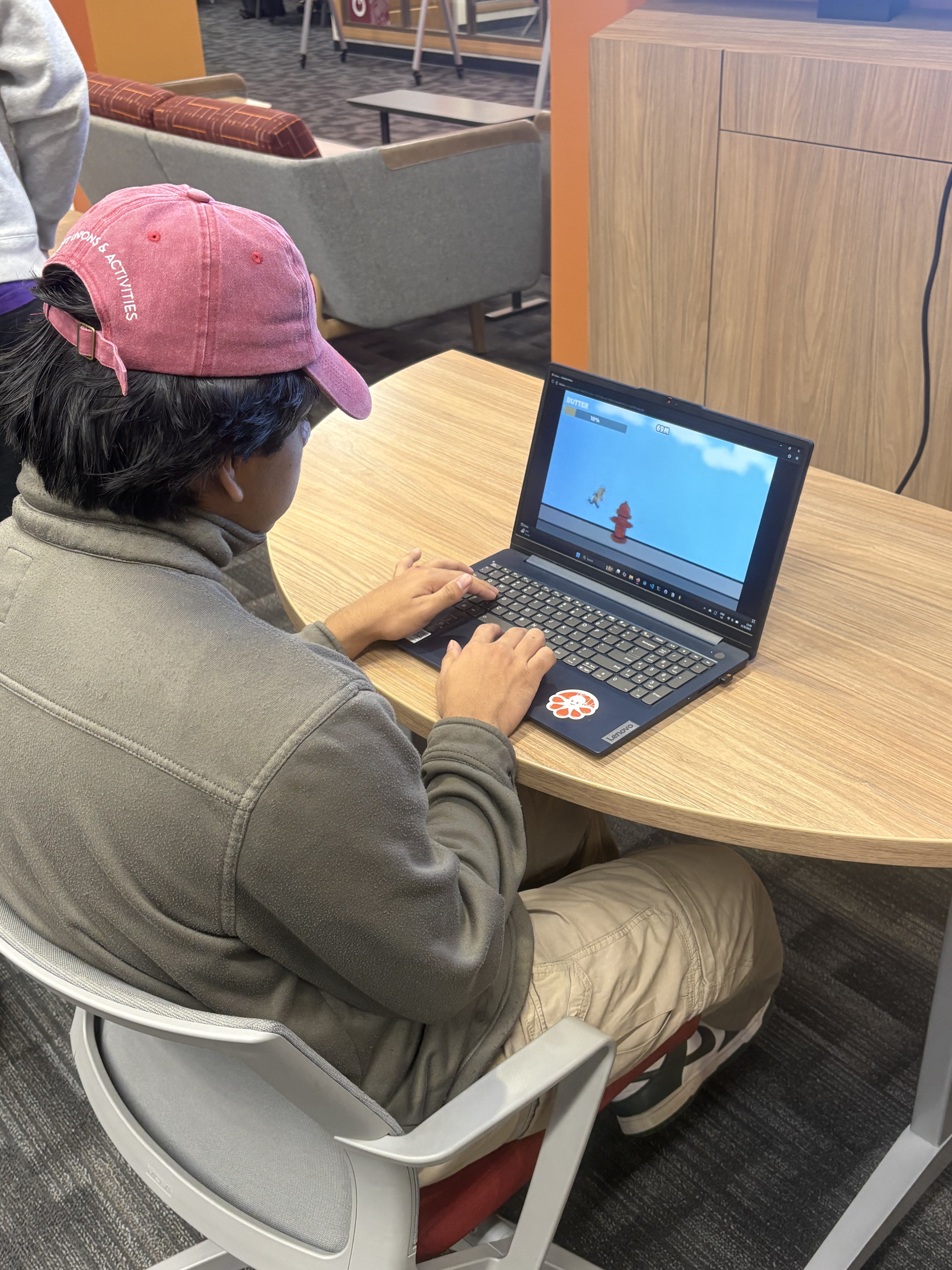
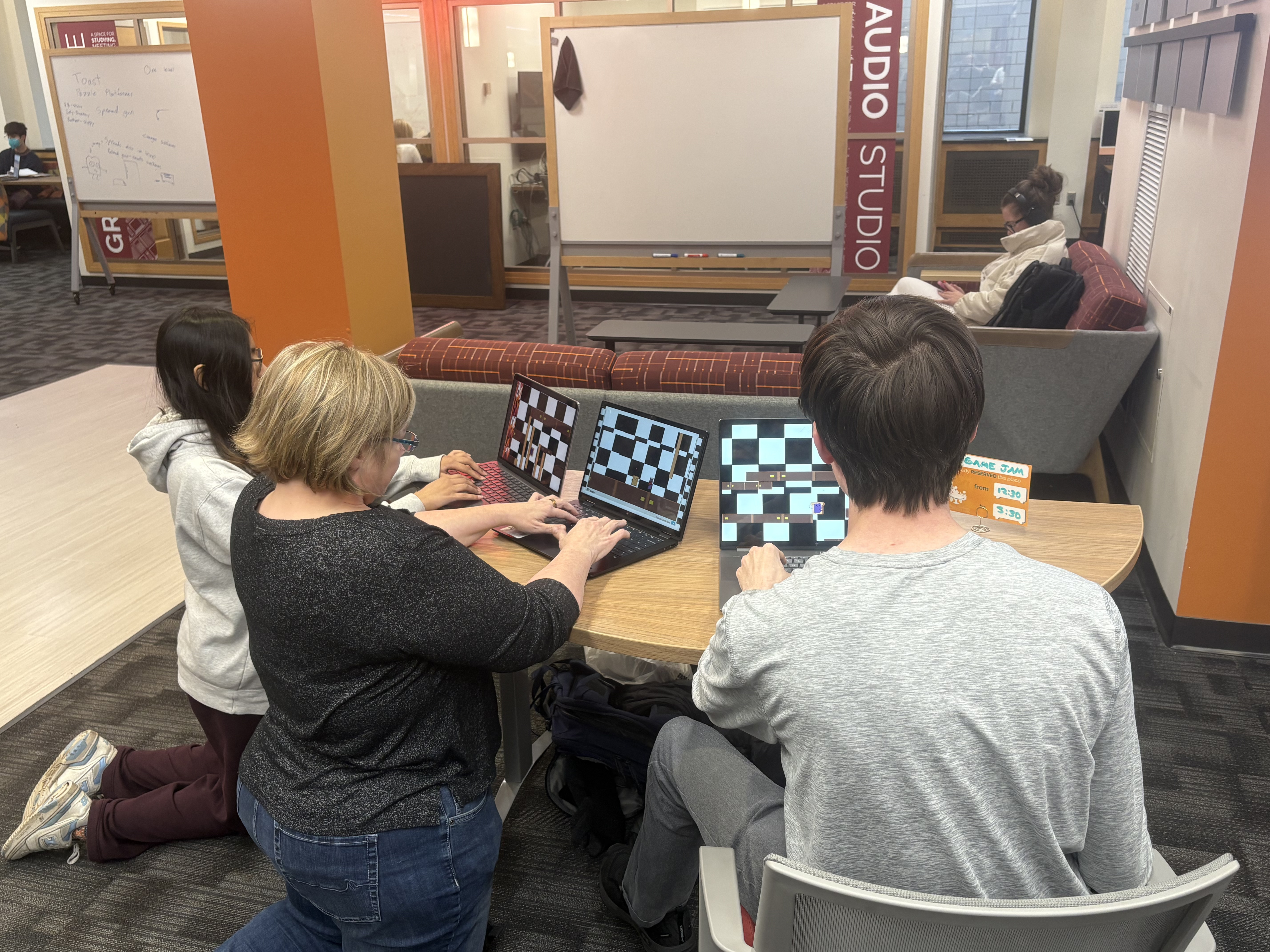
I did not face any particular challenges with set up, though this was primarily because the Toaster Innovation Hub is a space intended and prepared for events at any time. The only difficulty was figuring out how individuals would play the video games on Sunday, primarily by setting up tables near power sources for laptops. Participating teams were instructed to either bring a laptop on Sunday that individuals could play their games on, or they could use a Library laptop provided their game was accessible online or by flash drive. Teams all brought their own laptop, and we had no technical difficulties (a huge win!).
Program Execution
We had 36 sign ups, which was our maximum! We were prepared to have nine teams of four, though we knew we would lose some participants along the way. Ultimately, 20 participants were able to actually attend the whole weekend, divided into six teams; four chose to make video games, and two made board games. This ended up being a good amount of participants, and ensured we had plenty of food for everyone (without having much left over). I believe the drop off was primarily due to individuals who signed up early in October, but realized closer to the date that they could not participate in all 3 days due to classwork or other activities.
Participants were sent a feedback form after the event, asking for general feedback as well as answers to questions about the timeline, speakers, and skill building. All submissions indicated that the participants had a great time, met new people, built skills, and would want to participate in a game jam again. No one wanted less time; most participants indicated they could've used more time, such as by starting on Thursday. Participants liked the guest speakers but wanted more video game development representation, as we had only board game developers and publishers (I could not find any large video game development studios in Minnesota - in the future, I'd contact some indie developers to come speak).
Ultimately, the greatest sign of success, in my opinion, was that at least one team - originally all strangers to each other - continued to work on their game after the jam, and are hoping to publish their finished card game! My goals of students having more game design support, meeting others, and building new skills were definitely achieved. I think in the future, I would want to build more support for using Library resources, or at least document what they used; it was easy to see which teams used the Makerspace, but difficult to determine which online resources teams used, if any.
One of our Toaster student staffers wrote a blog post about the event.
Advice
This was a program I was very excited to run but uncertain about its success, as I am by no means an expert at facilitating game jams. For anyone looking to host a similar program, my biggest piece of advice is to rely on the expertise of others! I found a lot of resources online that helped to guide how I ran my event, including resources from other universities and long-run game jams. I also had a lot of help with general event planning from the Toaster operations director, Kimberlie Moock, who usually runs the Tinker at the Toaster event.
My other piece of advice is, if possible, to join a game jam yourself if you haven't before, so you can experience it as a participant - ideally in person, though there are tons of online game jams as well! Even if you don't have game design experience, teams also need writers, artists, QA testers, musicians, and so on, so there are certainly ways to use your unique skills.
This was a larger, more involved event, but game jams can take any form and fit any budget. I hope this inspired you to give game jams a try at your library!
Supporting Materials
Slideshow Images
More Programs
DIY Mini Zen Garden Workshop
Audiences:
Speed Friending
Audiences: