Curious about zines? Learn what they are, how they’re made, and why they’ve been such an important part of youth culture and self-expression. In this hands-on workshop, tweens and teens will discover the basics of zine-making and create their own mini zines to take home.
We’ll provide supplies, just bring your ideas, creativity, and voice!
Advanced Planning
The primary goal of this program was to introduce tweens and teens to zines as an accessible, low-barrier form of creative expression and to empower them to share their voices through self-publishing. By the end of the workshop, participants were expected to understand what zines are, recognize their role in youth culture and independent publishing, and create a simple one-page mini zine of their own. A key learning outcome was helping participants see that zines can be about anything (from personal experiences to fandoms or social issues) and that there is no “right” way to create one.
Planning began about a month in advance. I developed a short presentation to guide the workshop, covering what zines are, common types (such as perzines, fanzines, comics, and art zines), and brainstorming strategies to help participants generate ideas. The presentation also included practical instruction on layout, folding, and assembling a one-sheet mini zine, along with tips for printing and sharing work. I intentionally kept the instructional portion concise and paired it with a hands-on format so participants could quickly move into creating.
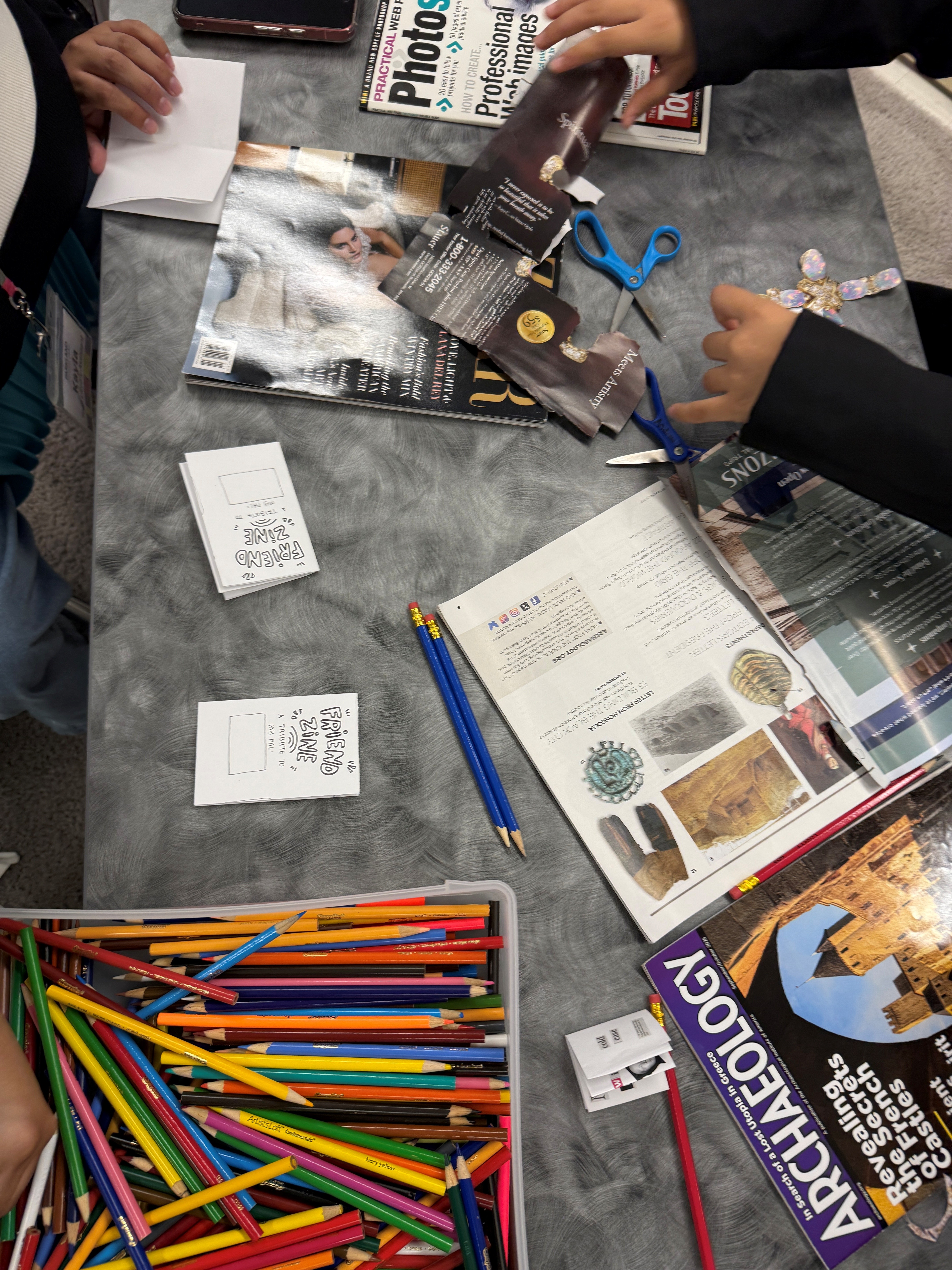
Preparation steps included gathering sample zines for inspiration, creating a folding template, and assembling simple, low-cost supplies such as paper, markers, and collage materials.
One challenge was pacing. Participants were eager to begin creating, so balancing the informational portion with hands-on time required adjustment. Keeping the introduction focused and allowing for flexible, self-directed making time helped maintain engagement and gave participants the space to explore their ideas more freely.
Marketing
Promotion for this program began approximately one month in advance. Flyers were created and displayed throughout the library, with intentional placement near the Little Free Zine Library and in the teen area to directly reach the target audience of tweens and teens already engaging with creative and self-directed materials.
This simple, location-based marketing approach proved to be effective. The program attracted participants who were already curious about zines or creative expression, resulting in a strong level of interest and engagement. Overall, the marketing initiative was successful in reaching the intended audience without the need for more extensive promotion.
Budgeting
This program was designed to be low-cost and highly accessible. Expenses were minimal and primarily included printing sample zines for demonstration purposes and ensuring an adequate supply of basic art materials such as paper, markers, colored pencils, pens, and crayons. Many of these supplies were already available within the library, which helped keep costs down.
For libraries looking to further reduce expenses, this program can easily be adapted by using recycled paper, scrap materials, or donated magazines for collage. Encouraging participants to create black-and-white zines for photocopying can also minimize printing costs. Overall, zine-making is an ideal budget-friendly program that can be scaled up or down depending on available resources.
Day-of-event Activity
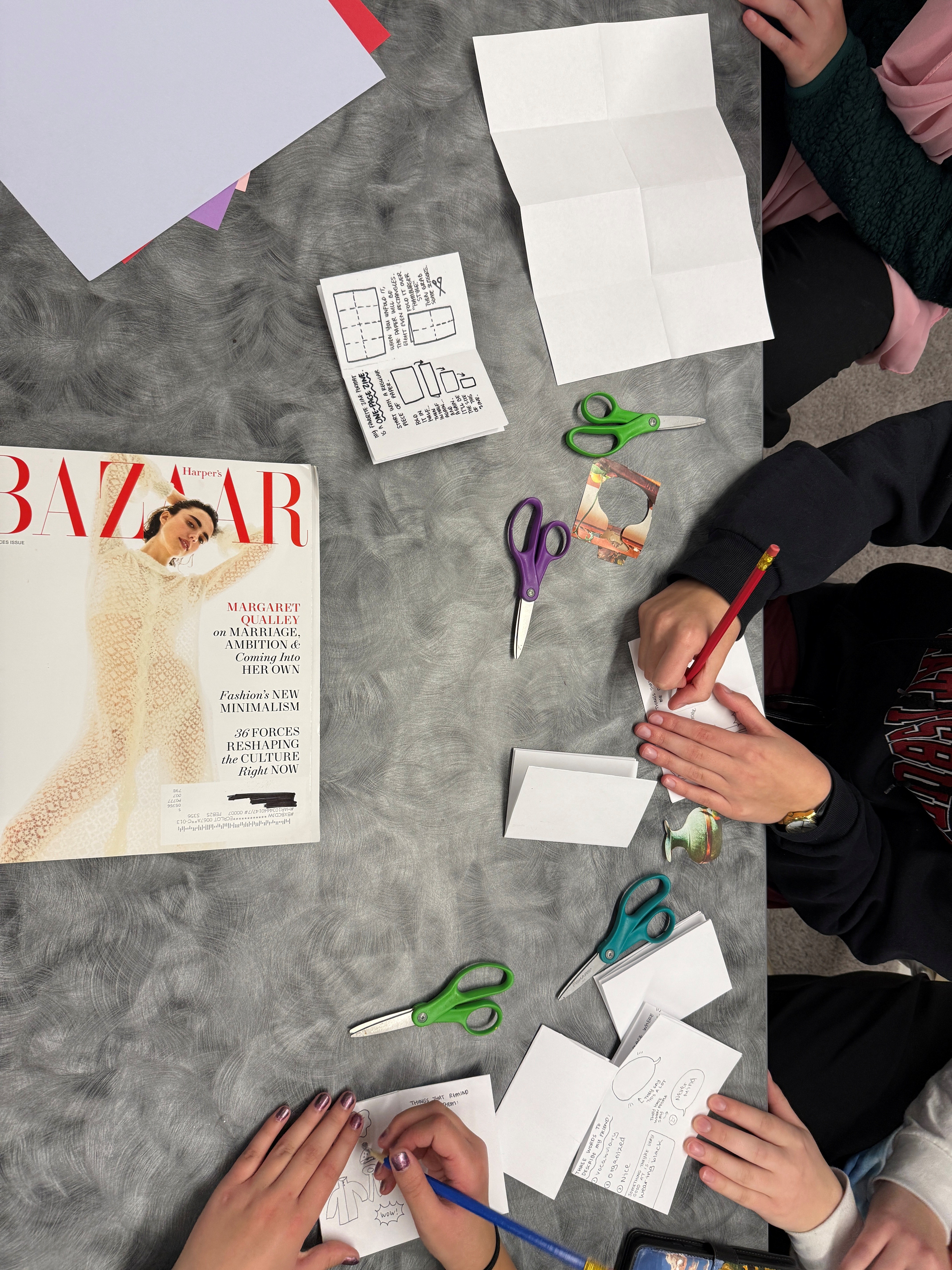
Set-up for this program was simple and efficient. The room was arranged classroom-style, with seating facing a TV monitor for the brief presentation portion. Tables were stocked with paper, scissors, and a variety of art supplies such as markers, pens, colored pencils, and crayons. To expand creative options, weeded magazines and glue were also provided for collage work.
The program could be run with one staff member facilitating.
There were no major unexpected challenges during the event. The straightforward set-up and flexible structure allowed participants to move easily between learning and creating, which helped the program run smoothly.
Program Execution
The program ran smoothly and was highly engaging for participants. Six teens attended, and they were enthusiastic about creating their own zines and experimenting with different ideas and formats. The hands-on nature of the workshop allowed them to quickly take ownership of their work, and many were excited by the opportunity to see their finished zines added to the rotation in the library’s Little Free Zine Library.
Feedback was informal but very positive. Several participants shared that they planned to introduce zine-making to their friends, which speaks to the program’s impact and accessibility. The goals of the program were successfully met, as attendees gained an understanding of zines and left with a completed piece of work.
Based on participant interest, there is also clear potential to expand this program to adult audiences in the future, as many have expressed curiosity about learning the process themselves.
Advice
Keep it simple! Make sure to print, cut, and fold examples of zines ahead of time so the attendees can see what the outcome can be. There are many possibilities!
Supporting Materials
Slideshow Images
More Programs
Persona Building for Teens
Audiences:

Slide Night
Audiences: