Through its Meet & Greet Candidates for Mayor and City Council program, the library creates a space where residents can meet candidates, ask questions and learn about the people seeking to represent them without the pressure that can accompany a traditional campaign event. There’s no registration to attend and candidates cannot ask for campaign donations.
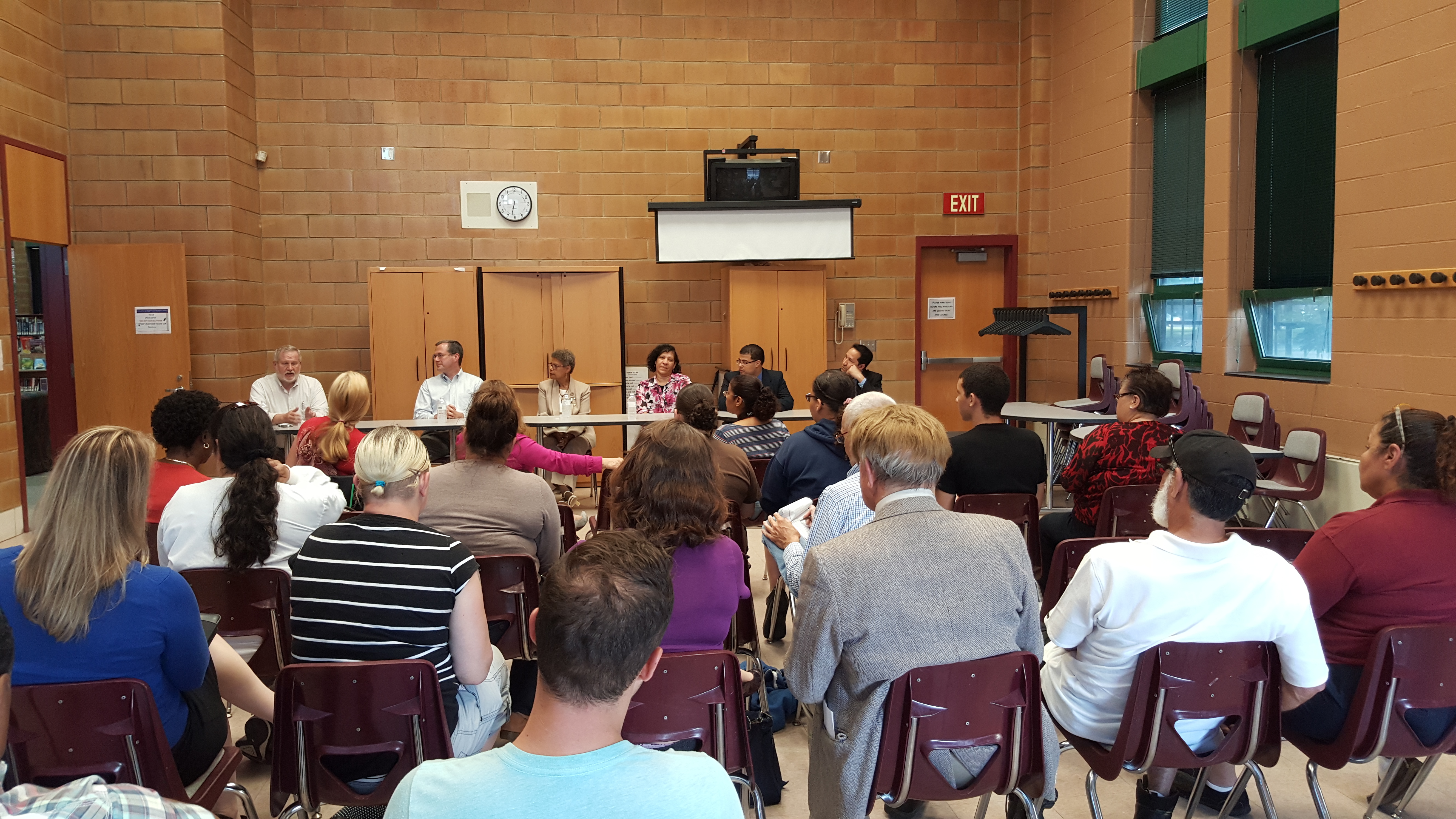
“Residents have a good sense that the library is a safe place to learn and explore, on their own terms,” says Jean M. Canosa Albano, assistant director for public services. “That sense of trust motivates people to come out, meet their neighbors and speak with candidates directly.”
That trust is one reason public libraries can serve as important civic spaces. ALA's Reader. Voter. Ready. initiative emphasizes that libraries are nonpartisan institutions that provide access to information, resources, programs and public spaces that support civic engagement. The initiative encourages libraries to help communities become informed and prepared to participate in elections while also supporting year-round civic participation.
“As library workers, we are also tenacious in reaching out to candidates and getting them booked to participate, just as we turn over every stone to find the answers to a patron’s questions,” says Albano.
A welcoming civic space requires intention
The library plays an active role in ensuring residents can hear from everyone on the ballot. That approach is central to the library's goal of making the event a nonpartisan resource for voters. Campaign signs aren't displayed inside the library, and staff conduct a run-through before events to anticipate safety and logistical concerns.
Even the physical arrangement of the program matters. When the library hosts tabling events, Albano says staff have learned not to seat competing candidates next to one another. A voter may be less likely to speak openly with a challenger about concerns with an incumbent, for example, if that incumbent is sitting within earshot.
For Albano, creating a nonpartisan civic space requires more than simply calling an event nonpartisan. It requires intentional planning to make sure residents feel comfortable participating.
A one-stop shop for voters
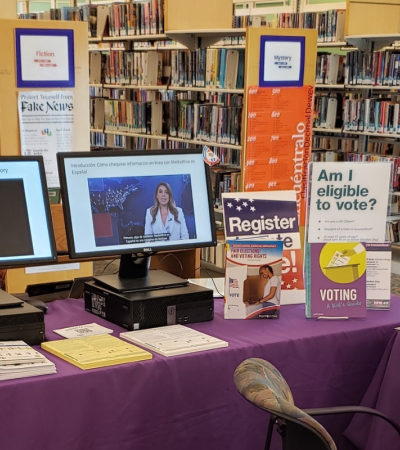
The library's position as a municipal department also creates opportunities for collaboration with other city departments, including the Elections Office. This partnership allows the library to provide residents with a range of election resources in one place. Voters can learn about the candidates, check their voter registration status, find their polling place and register to vote. Elections staff can also be on hand to demonstrate the city's voting machines.
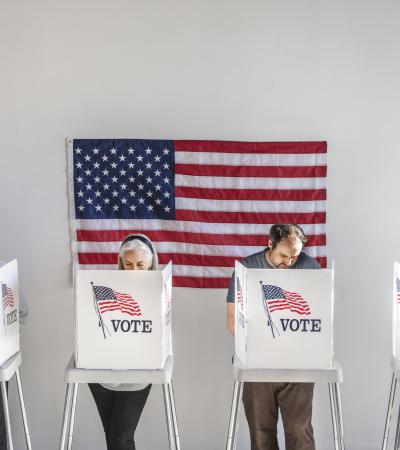
Residents can even practice voting with a sample ballot, which can be incredibly helpful for first-time voters. The mock ballot includes questions such as “What’s the best ice cream flavor?” This is a deliberately low-stakes way for voters to become familiar with the equipment without confusing the practice ballot with a real election.
The result is what Albano describes as “one-stop shopping”: residents can meet the people running for office while also getting the practical information they need to participate in the election. The model builds on the idea that libraries are uniquely positioned to provide both information and access.
Responding to community needs
Springfield's civic programming grew out of a community study that identified an interest in civic engagement. In response to this study, Albano formed a community team that included library staff, a former elected official and an elections official to discuss what the library could do.
The conversations revealed that residents had questions about what it takes to run for office, while others wanted to learn more about candidates without attending multiple campaign events.
The library responded with a broader slate of programming, including candidate forums, panel discussions on “What's It Like to Run for Office?” and trainings on campaign finance law.
The approach shows that libraries can create ample opportunities for residents to understand how local government works, learn about the people seeking office and participate in conversations about issues affecting their communities.
From ballot questions to broader civic conversations
The library has also brought that approach to ballot questions. One forum, titled “Slots, Pot, Veal, and Schools,” brought proponents and opponents together to discuss ballot measures involving slot-machine gambling, marijuana, treatment of animals and charter schools.
The event drew a large audience, giving residents an opportunity to hear different perspectives and ask questions. Springfield's local public access channel filmed the program, extending its reach beyond those who attended in person.
For libraries considering their own civic programs, Albano says it doesn’t have to be complicated. “Partnering!” she advises. “Teamwork makes the dream work.”
Libraries can work with their local election boards or commissions, the League of Women Voters and other community organizations. In Springfield, Albano points to local Black sororities as particularly active partners in nonpartisan voter turnout efforts.
A library could begin with something as straightforward as voter registration, voter education, registration-status checks or information about polling places.
ALA's Reader. Voter. Ready. initiative includes an Election Collaboration Toolkit developed with the League of Women Voters, as well as ideas for civic programming and voter engagement.
 Election Day and beyond
For Albano, the work doesn't end when an election does. She would like to see Springfield City Library engage more with younger voters and potential voters, but says the first step is to listen to people who have influence in those communities and determine which strategies will be most effective.
As ALA’s Reader Voter Ready page on civic programming states, “democracy doesn’t end when the polls close.” For libraries, that can mean incorporating civic themes into existing collections and programs rather than treating elections as a once-every-few-years event. A book display, a story time or a how-to-get-involved panel with a local organization can provide an entry point into civic life.
That year-round focus also reflects the idea that civic participation can begin long before someone casts their first ballot. The “Inspiring Future Voters” booklist contains fiction and nonfiction titles for young people from birth through young adulthood that explore voting, civic engagement and making one's voice heard.
Springfield City Library has already seen exciting outcomes from taking this engagement beyond election cycles.
“Our City Council now more closely reflects the demographics of the community than it did before,” Albano says. “The early training sessions were open to all, not just potential candidates. These were important to a number of candidates who ended up running, and some even won!”
For more free resources to help promote year-round civic participation at the library, visit the Reader. Voter. Ready. homepage.