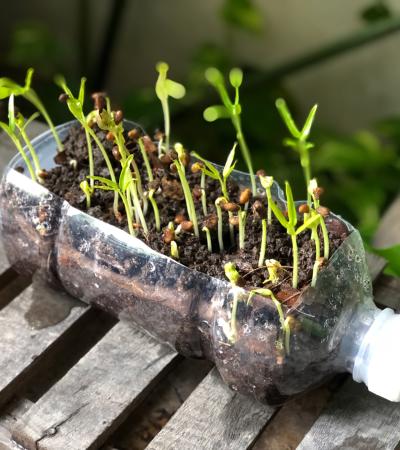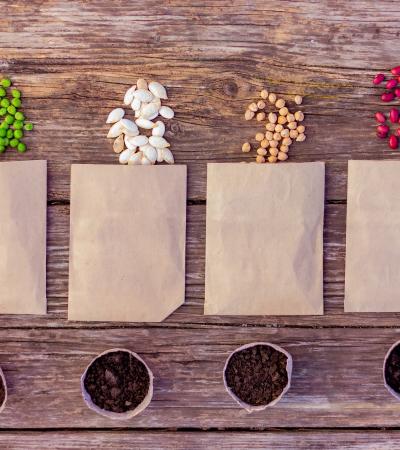
Attendees learn how to grow plants during the coldest part of the year. The program began with a presentation by a master gardener, who discussed how to grow microgreens at home and what to use them for. Afterward, they did hands-on planting with seeds and dirt supplied by the library.
This program was inspired by what I learned as part of ALA's Resilient Communities: Advancing Sustainability in and through Libraries program and e-course, “Sustainable Librarianship: Core Competencies and Practices."
Advanced Planning
The library had started a seed library five months prior, so this was part of a concerted effort to tie programming into that resource. The goal was to advertise the seed library and also to support at-home planting and gardening.
Planning began six months prior, with one programmer reaching out to the Virginia Cooperative, who supplies seeds for our seed library and oversees the master gardener program in our area. We coordinated a program series, with this being one of the events. Our contact with that organization prepared the presentation, and we coordinated with him for purchases. The library did buy the seeds, containers, and dirt, but we bought the ones our contact suggested. Since we had a presenter, preparation was minimal on our end, with the biggest concern being reserving our community room, storing the seeds we bought (we needed someplace cold so they didn't germinate), and remaining in touch with our presenter.
Marketing
We promoted the event with in-branch flyers, adding it to our library magazine, and sharing it with local gardening groups. We also shared our flyer with the Virginia Cooperative, and they also shared it with their community. We had 26 attendees, which is very good for our adult programming, so we felt it was successful.
Budgeting
The entire cost was toward the microgreen supplies. We did buy the ones recommended by our presenter, and we offered a good variety of five or six seed types, which allowed each person to do two or three plantings. Costs could be cut by limiting the options or going for cheaper versions.
Day-of-event Activity
The setup for the event was presentation-style, with a section of tables to the side for planting. Since we already had a presenter and he brought an additional master gardener, we only needed one staff member for setup, cleanup, and hosting. As for unexpected challenges, since the program took place in January, we had to reschedule due to weather-related closures. We set it for two weeks after and still had good attendance.
Program Execution
For the program, we had 26 attendees. The presenter came with a PowerPoint, and talked for about 20 minutes discussing how to grow microgreens and sprouts, the plants that do well being started inside, and also about what parts of the plants you can eat and the growing times. After that, they moved on to planting. The presenter provided the tools, and we provided the supplies. The presenter and an assistant walked attendees through planting and then took questions afterward. The entire program lasted about one hour, and our goals were achieved.
Advice
Since the program is very interactive, the age range could be altered to include children. I would recommend shortening the presentation time if doing so. I'd also make sure you do the program in an area where you don't mind getting dirt on the ground. Finally, this program works best when experts present, so I would definitely recommend reaching out to local gardening and educational groups for support. They make it a lot easier and may provide enough materials to make the program free.
Supporting Materials
More Programs
Plant Share and Propagation Library
Audiences: